
In the brewing industry, beer color is a key factor affecting the sensory quality of the final product. To achieve a clearer and more stable beer color, many breweries use activated carbon for decolorization during production.
This article will provide a detailed overview of the role of activated carbon in beer decolorization, helping breweries optimize production and improve product quality.
Why Beer Needs Decolorization
The color of beer comes from malt, boiling reactions of wort, oxidation products, and pigments formed during storage. Some dark-colored components can affect beer clarity and flavor stability, such as:
- Polyphenols
- Pigment metabolites
- Dark compounds formed by oxidation
When beer color is too intense, it can affect the product’s appearance and market acceptance. Therefore, moderate decolorization using activated carbon becomes a necessary step.
The Role of Activated Carbon in Beer Decolorization
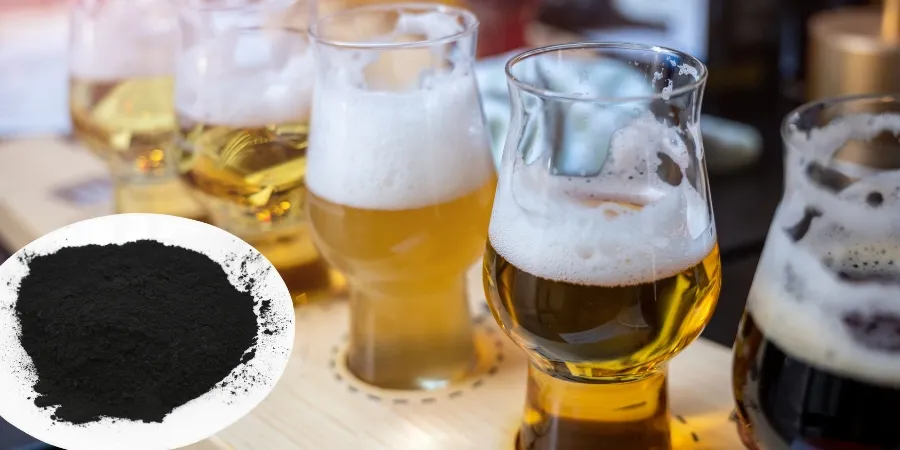
The core of beer decolorization is the removal of pigment molecules that affect the final appearance. Activated carbon is the preferred material due to its extremely high surface area, tunable pore structure, and strong adsorption capacity.
Mechanism of Activated Carbon Decolorization
Activated carbon removes pigments through the following mechanisms:
- Physical adsorption: Traps pigment molecules within the pores of activated carbon
- Chemical interactions: π-π interactions and van der Waals forces adsorb polyphenols, Maillard reaction products, and caramel compounds
- Surface functional group reactions: Oxygen-containing groups enhance adsorption of organic pigments
Commonly removed pigments include:
- Maillard reaction products
- Polyphenols
- Oxidation pigments
- Caramel-like pigments
These compounds often deepen beer color and may affect flavor stability.
Advantages of Activated Carbon for Breweries
Activated carbon decolorization offers:
- Significant decolorization effect
- Rapid adsorption
- Suitable for continuous or batch processes
- Preserves beer aroma
- Natural, safe, and food-grade compliant
- Cost-effective for large-scale production
Types of Activated Carbon for Beer Decolorization
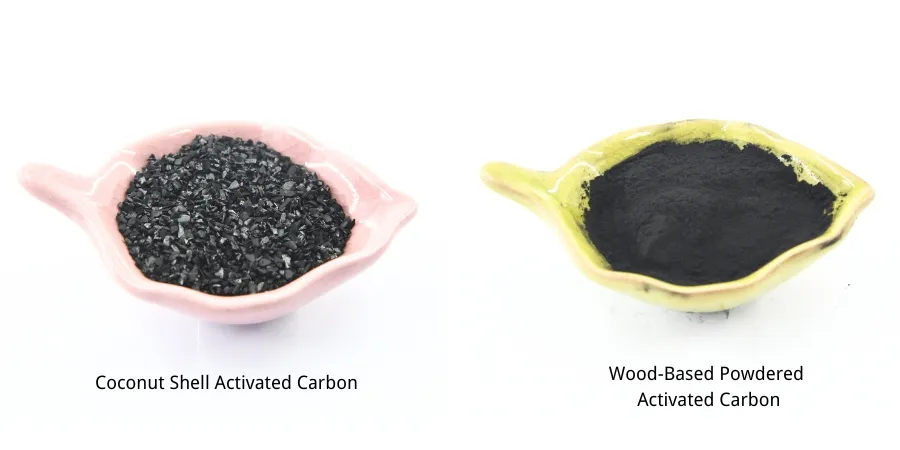
Choosing the right type of activated carbon is crucial for pigment removal efficiency, filtration performance, and flavor retention. Tingyuan Carbon provides high-quality activated carbon designed specifically for decolorization.
Coconut Shell Activated Carbon
Made from coconut shells through high-temperature carbonization and activation, coconut shell activated carbon features highly developed micropores, offering extremely high surface area and adsorption strength. It is widely used in food and beverage industries.
Key Features and Advantages:
- Rich micropores: Strong adsorption of small pigment molecules
- High hardness: Reduces dust generation and improves filtration stability
- Low ash content: Food-grade quality, does not affect beer
- Reusable: Suitable for fixed-bed or column systems in continuous processes
Ideal for long-duration adsorption, continuous flow treatment, or selective removal of small pigment molecules.
Wood-Based Powdered Activated Carbon
Wood-based powdered activated carbon mainly features meso- and macropores, with rapid adsorption capacity and excellent dispersibility. It is the most widely used type in beer decolorization, especially suitable for batch processing and fast color correction.
Key Features and Advantages:
- Developed meso- and macropores: Effective for adsorbing large organic pigments such as Maillard products and polyphenols
- Fast adsorption: Achieves strong decolorization in a short time
- Good dispersibility: Mixes evenly in beer for thorough adsorption
- Excellent filtration performance: Reduces filtration pressure, improves production efficiency
- Minimal impact on flavor: Does not noticeably affect aroma or foam quality
Cost-effective, making it particularly suitable for large-scale industrial production.
Contact me todayConclusion
Activated carbon beer decolorization is an efficient, economical, and safe method that can significantly improve beer color and flavor stability. Selecting the appropriate type and quality of activated carbon is key to achieving the best decolorization results.
If you are looking for reliable activated carbon for beer decolorization, contact us today. We provide professional advice, free samples, and long-term supply solutions.