
Clean and safe drinking water is essential for human health. However, due to increasing industrial activities, agricultural runoff, and aging water supply systems, drinking water is easily affected by organic compounds, chlorine, pesticides, and other contaminants. Therefore, purifying drinking water is crucial.
This article will introduce the role of activated carbon in drinking water purification and help you choose the right type of activated carbon.
The Role of Activated Carbon in Drinking Water Purification
Activated carbon is a highly efficient adsorbent that can remove a wide range of impurities from water. With its extremely high surface area and well-developed pore structure, activated carbon effectively adsorbs dissolved organic compounds, residual chlorine, and other trace contaminants that are difficult to remove through conventional filtration methods.
The main contaminants that can be removed by activated carbon include:
- Chlorine and Chloramines: Eliminates unpleasant tastes and odors.
- Volatile Organic Compounds (VOCs): Such as benzene and toluene.
- Pesticides and Herbicides
- Disinfection Byproducts (DBPs): Byproducts formed during chlorination.
- Micropollutants: Such as pharmaceutical residues and endocrine-disrupting chemicals.
In addition, activated carbon improves the color, taste, and overall quality of drinking water, making it an ideal material for both industrial and household water purification systems.
Contact me todayHow Activated Carbon Works
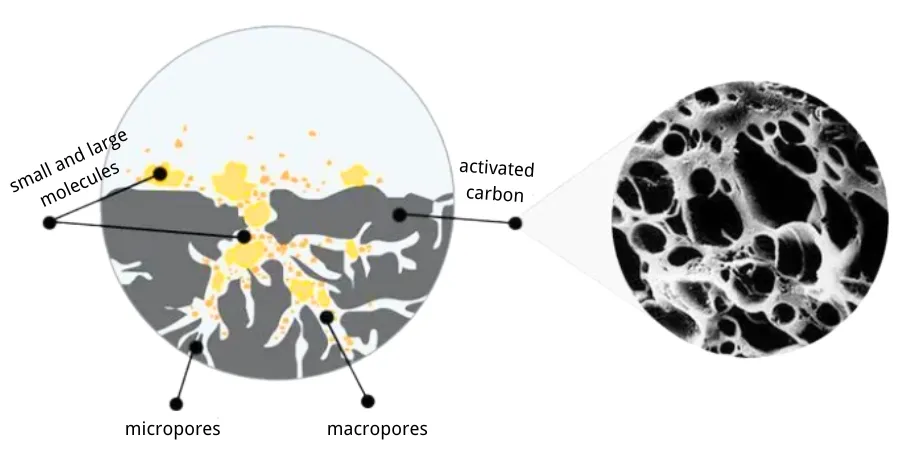
The high efficiency of activated carbon in drinking water treatment is due to its unique adsorption mechanisms. Below is a brief overview of how activated carbon functions in water treatment:
Adsorption Mechanism
Activated carbon removes contaminants through two primary mechanisms: physical adsorption and chemical adsorption.
- Physical Adsorption: The porous structure of activated carbon captures contaminant molecules from water. Its micropores are particularly effective at adsorbing small molecules, such as VOCs and chlorine.
- Chemical Adsorption: Activated sites on the carbon surface react with certain contaminants to remove substances such as heavy metals and some organic compounds.
Role of Pore Structure
The pore size of activated carbon (micropores, mesopores, and macropores) determines its adsorption capacity for different types of contaminants:
- Micropores: Ideal for adsorbing small molecules, such as dissolved organic compounds and odor-causing substances.
- Mesopores: Suitable for medium-sized molecules, including natural organic matter and certain industrial pollutants.
- Macropores: Capture larger molecules, such as dyes and suspended particles.
Specific Processes for Removing Contaminants
- Improving Taste and Odor: Activated carbon adsorbs chemicals that cause unpleasant tastes and odors, such as chlorine and sulfides.
- Removing Harmful Chemicals: Effectively eliminates pesticides, herbicides, solvents, and industrial chemicals from water.
- Reducing Disinfection Byproducts (DBPs): Minimizes byproducts like trihalomethanes (THMs) formed during chlorine disinfection.
Types of Activated Carbon for Drinking Water Purification
Choosing the right type of activated carbon is critical for effective drinking water purification. TingyuanCarbon offers a variety of high-quality activated carbon products specifically designed for water treatment.
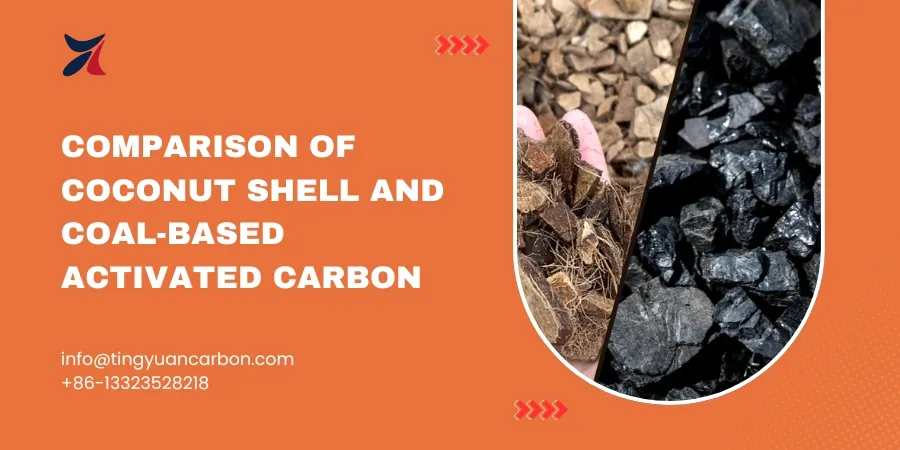
Coconut Shell Granular Activated Carbon
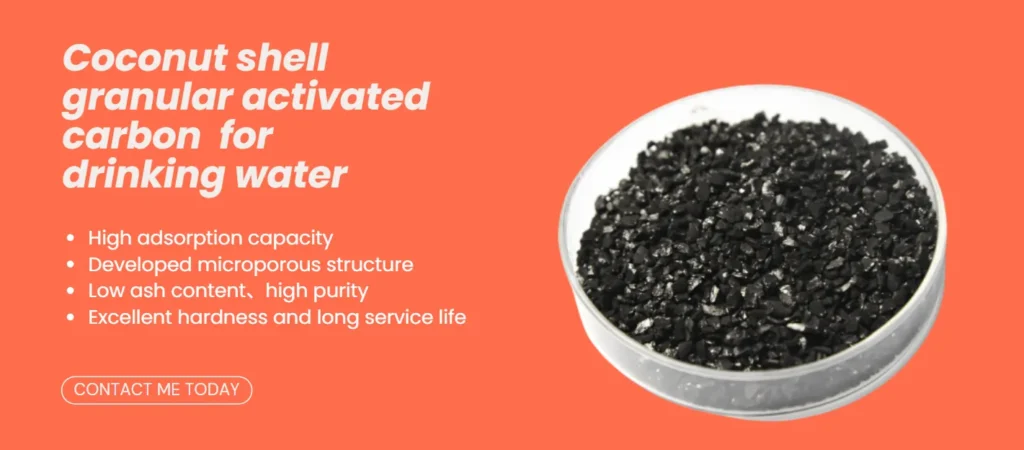
- Features: High hardness, low ash content, and rich microporous structure.
- Advantages: Excellent at adsorbing low-molecular-weight organic compounds and residual chlorine.
- Applications: Municipal water treatment, bottled water production, and household water purification systems.
Coal-Based Granular Activated Carbon
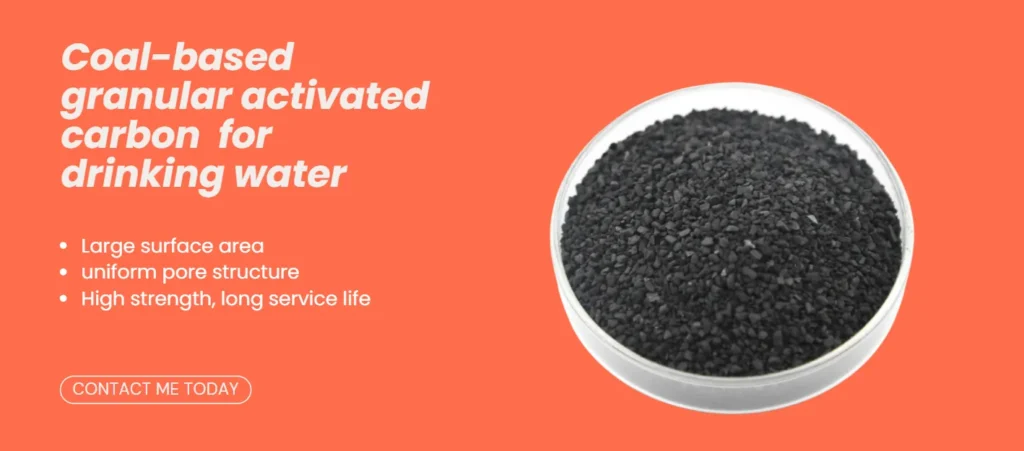
- Features: Rich in mesopores, suitable for adsorbing larger organic molecules.
- Advantages: Cost-effective and ideal for large-scale purification projects.
- Applications: Industrial drinking water systems.
Wood-Based Powdered Activated Carbon
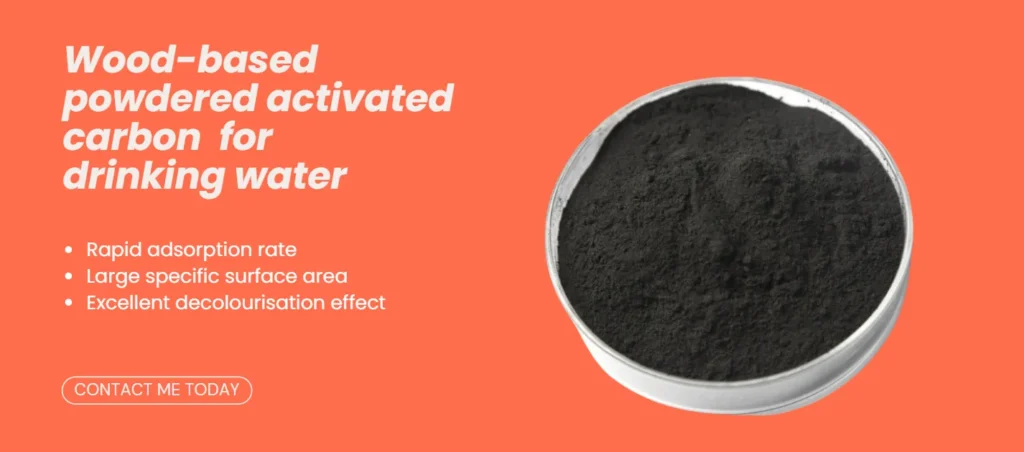
- Features: Low density, fast adsorption rate, and easy dosing.
- Advantages: Outstanding decolorization performance and effective removal of natural organic matter (e.g., tannic acid).
- Applications: Suitable for the food and beverage industry.
TingyuanCarbon provides a full range of high-quality activated carbon products and offers professional advice and customized solutions to meet your specific needs, ensuring efficient drinking water purification.
Conclusion
Activated carbon provides a reliable solution for ensuring safe drinking water by removing organic pollutants, residual chlorine, and unpleasant odors. TingyuanCarbon offers premium coconut shell, coal-based, and wood-based activated carbon products specifically designed for water purification. With over 20 years of industry experience, we deliver consistent quality, reliable performance, and on-time delivery.
Contact us today to learn more about drinking water purification solutions or to request a quote!