
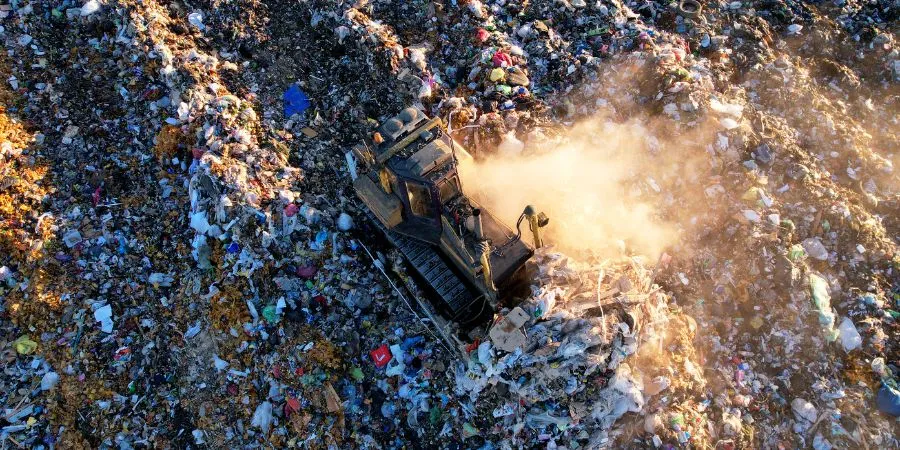
During the landfill process, the decomposition of organic waste generates landfill gas (LFG), which contains harmful components such as hydrogen sulfide (H₂S), volatile organic compounds (VOCs), and siloxanes. These gases not only cause unpleasant odors but can also corrode equipment and negatively impact the efficient utilization of landfill gas resources.
Thanks to its excellent adsorption performance, activated carbon is widely used in landfill gas purification, enabling deep cleaning and safe utilization of the gas.
Source and Composition of Landfill Gas
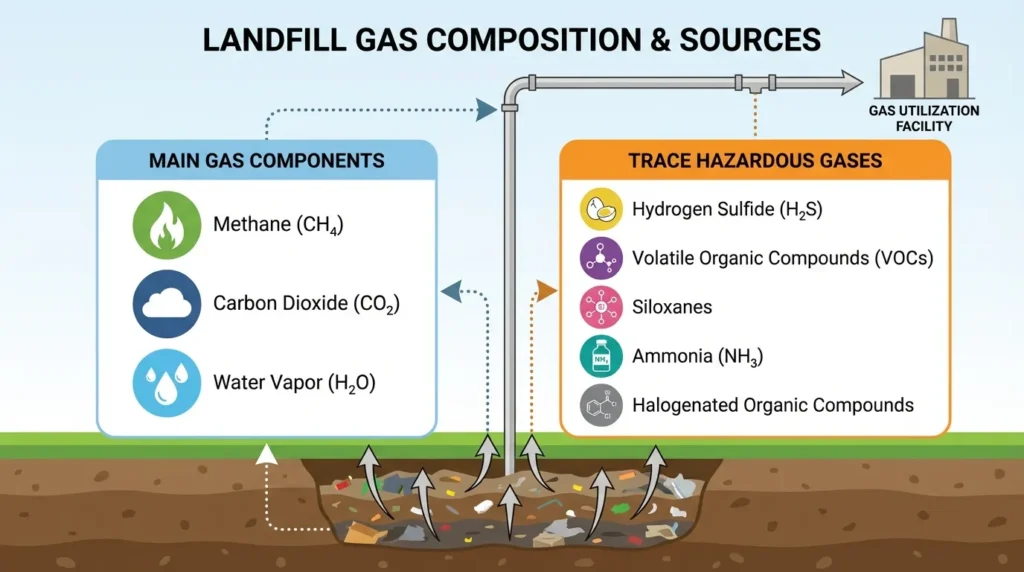
Landfill gas is primarily produced through the anaerobic microbial decomposition of organic waste. The formation process generally occurs in four stages: aerobic phase, acidification phase, acetogenesis phase, and methanogenesis phase.
Main Gas Components
- Methane (CH₄): Approximately 45%–60%, flammable and can be used for power generation
- Carbon dioxide (CO₂): Approximately 40%–55%
- Water vapor (H₂O): Varies depending on temperature
Trace Harmful Gases
Although present in low concentrations, these components have significant impacts on the environment and equipment:
- Hydrogen sulfide (H₂S): Highly corrosive with a strong odor
- Volatile organic compounds (VOCs): Such as benzene and toluene
- Siloxanes: Form silica deposits after combustion
- Ammonia (NH₃): Irritating and harmful
- Halogenated compounds: Potentially toxic
These trace pollutants are the primary targets of landfill gas purification, where activated carbon plays a crucial role.
Contact me todayWhy Use Activated Carbon for Landfill Gas Treatment?
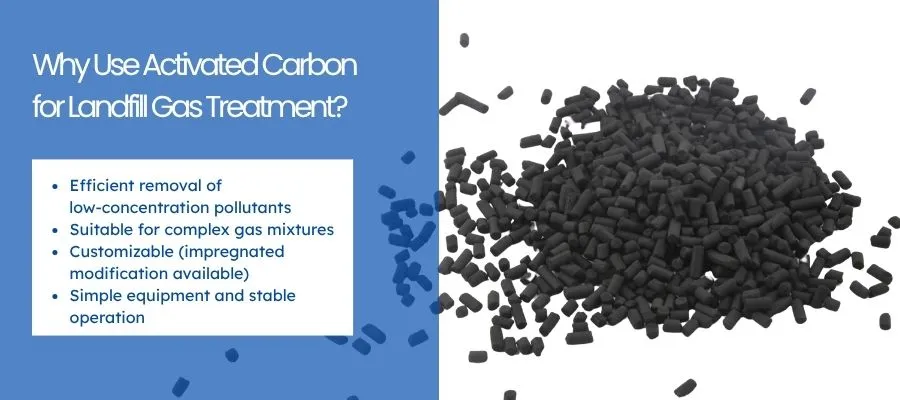
Activated carbon is a porous carbon material with a highly developed pore structure and large surface area, making it highly effective in gas adsorption applications.
- Efficient removal of low-concentration pollutants
- Suitable for complex gas mixtures
- Customizable (impregnated modification available)
- Simple equipment and stable operation
Compared with technologies such as combustion, condensation, and biological treatment, activated carbon is especially suitable for the deep purification stage.
Mechanisms of Activated Carbon Adsorption
Activated carbon purifies landfill gas mainly through the following mechanisms:
Physical Adsorption
Gas molecules are captured within the microporous structure via intermolecular forces (van der Waals forces):
- Suitable for: VOCs and organic sulfur compounds
- Feature: Reversible adsorption and regenerable
Chemical Adsorption
Through impregnation with chemicals such as KOH, NaOH, or Fe₂O₃, activated carbon can react chemically with pollutants:
- H₂S + active components → solid sulfides
- Enhances removal efficiency for specific gases
Common Types of Activated Carbon for Landfill Gas Treatment
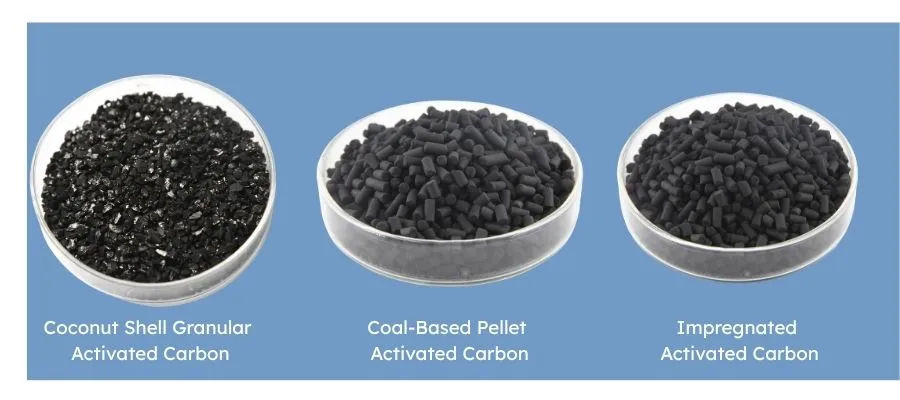
In landfill gas purification, different pollutants require different adsorption materials. Therefore, selecting the appropriate type of activated carbon based on gas composition, concentration, and process conditions is essential.
Coconut Shell Granular Activated Carbon
Produced from high-quality coconut shells through carbonization and activation, this type offers excellent performance for gas purification.
- Natural raw material with low impurities and high stability
- Highly developed micropore structure
- Strong adsorption capacity for small molecules
- Excellent for VOC removal (e.g., benzene, toluene)
- Ideal for polishing and final purification stages
Coal-Based Pellet Activated Carbon
Manufactured from anthracite or bituminous coal using extrusion and high-temperature activation, featuring a cylindrical shape and high mechanical strength.
- High strength and durability
- Uniform pore distribution (micropores + mesopores)
- Low pressure drop, suitable for high flow rates
- Cost-effective for large-scale applications
Impregnated Activated Carbon
Modified by adding alkaline substances or metal oxides (e.g., KOH, NaOH, iron, copper) to enhance adsorption of specific gases.
- Selective adsorption capability
- Highly effective for H₂S and NH₃ removal
- High adsorption capacity and efficiency
- Customizable based on target pollutants
Key Design and Selection Parameters
In engineering applications, the following factors should be considered:
- Empty Bed Contact Time (EBCT): Typically 1–5 seconds, critical for adsorption efficiency
- Gas velocity: Excessive velocity reduces performance
- Bed depth: Affects contact time and treatment capacity
- Operating temperature and humidity: High humidity can reduce adsorption efficiency
- Replacement cycle: Determined by pollutant concentration and loading
Operation and Maintenance Recommendations
- Regularly monitor outlet gas concentrations
- Use multi-stage adsorption beds to extend service life
- Prevent liquid water from entering the carbon bed
- Replace or regenerate activated carbon once saturated
Conclusion
Activated carbon is an efficient and flexible adsorption material that plays an indispensable role in landfill gas purification. By selecting the right type of activated carbon and optimizing process design, high-efficiency removal of H₂S, VOCs, and siloxanes can be achieved.
Contact us today to receive free sample testing and customized solutions.