
Activated carbon is an indispensable material in the oil and natural gas processing industry. It handles a range of critical jobs — from stripping hydrogen sulfide out of natural gas to capturing mercury before it destroys cryogenic equipment, from recovering valuable hydrocarbons to treating refinery wastewater.
This article provides a detailed overview of the applications of activated carbon in the oil and gas industry to help you select the right activated carbon product.
Where Activated Carbon Fits in Oil & Gas
Oil and gas operations generate streams that need purification at multiple points — upstream at the wellhead, midstream in pipelines and processing plants, and downstream in refineries and petrochemical facilities. Activated carbon is used across all these stages because it offers a unique combination of advantages: it handles a wide range of contaminants, it works at industrial scale, and it does not introduce chemicals into the process stream.
The table below gives a quick overview of the main applications:
| Application | What It Removes | Why It Matters |
|---|---|---|
| Natural gas sweetening | Hydrogen sulfide (H₂S) | Pipeline spec, safety, corrosion prevention |
| Mercury removal | Elemental mercury (Hg⁰) | Protects aluminum exchangers in LNG plants |
| VOC & hydrocarbon recovery | Benzene, toluene, xylene, other VOCs | Regulatory compliance, product recovery |
| Amine & glycol treatment | Degradation products, organics | Extends solvent life, reduces foaming |
| Refinery wastewater | Oil, phenols, BTEX, COD | Discharge permit compliance |
Natural Gas Desulfurization: Removing H₂S
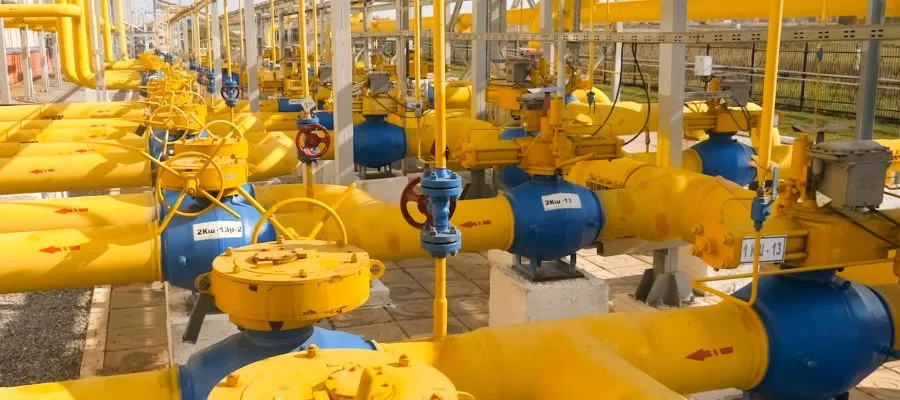
Hydrogen sulfide is toxic, corrosive, and foul-smelling — it gives natural gas its “sour” designation. Pipeline specifications in most regions cap H₂S at 4 ppm or less. Beyond the safety risk, H₂S corrodes pipelines, poisons downstream catalysts, and forms sulfur dioxide when burned.
How activated carbon removes H₂S
Activated carbon removes H₂S through catalytic oxidation. The carbon surface acts as a catalyst: H₂S adsorbs into the pores, reacts with oxygen present in the gas stream, and converts to elemental sulfur and water:
2 H₂S + O₂ → 2 S + 2 H₂O
Standard (unimpregnated) carbon can do this, but the capacity is limited — typically 0.05–0.15 g H₂S per gram of carbon. For more demanding applications, chemically impregnated carbons are used.
Impregnated carbons for high H₂S loads
When H₂S concentrations are high or when the gas also contains mercaptans and other sulfur species, caustic-impregnated carbon (NaOH or KOH on the carbon surface) delivers significantly higher capacity — typically 0.3–0.5 g H₂S/g carbon. The caustic acts as a chemical scrubber inside the pores, converting H₂S to sodium or potassium sulfide, which stays trapped inside the carbon.
Contact me todayMercury Removal in Gas Processing
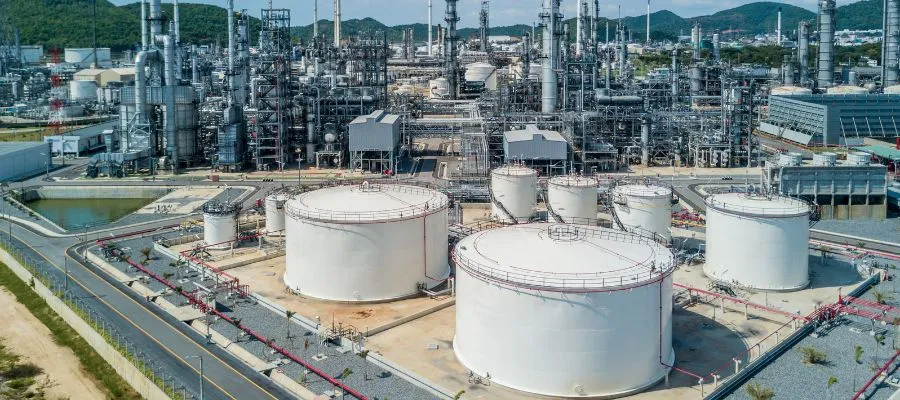
Many natural gas fields — particularly in Southeast Asia, the Middle East, and parts of North Africa — contain trace mercury. Even at parts-per-billion levels, mercury is a serious problem for LNG and gas processing plants. Elemental mercury reacts with aluminum to form an amalgam that causes liquid metal embrittlement — microscopic cracking that can lead to catastrophic failure of brazed aluminum heat exchangers used in cryogenic processing.
The solution is sulfur-impregnated activated carbon. Sulfur loaded onto the carbon surface reacts with mercury vapor to form mercuric sulfide (HgS), one of the most stable and insoluble mercury compounds known. A well-designed sulfur-impregnated carbon bed reduces mercury to below 0.01 µg/Nm³ — the standard specification for LNG feed gas.
VOC and Hydrocarbon Recovery
Oil storage tanks, loading terminals, and refinery vents emit volatile organic compounds — benzene, toluene, ethylbenzene, xylene (collectively BTEX), and light hydrocarbons. These emissions are regulated under clean air legislation in most jurisdictions. Activated carbon provides a proven, cost-effective control technology.
The typical approach is a vapor recovery unit (VRU) that passes the vent gas through a bed of granular activated carbon. The carbon adsorbs the hydrocarbons, and the cleaned air is discharged. When the carbon bed reaches saturation, it is regenerated — usually with steam or vacuum — and the desorbed hydrocarbons are recovered and returned to the process. A properly designed system can capture 95–99% of VOCs.
Amine and Glycol Treatment
In gas processing, amine solutions are used to absorb acid gases (H₂S and CO₂), and glycols are used for dehydration. Over time, these solvents degrade — thermal breakdown, chemical reaction with dissolved gases, and organic contamination all generate degradation byproducts.
The problem? These degradation products cause foaming, which reduces contact efficiency in the absorber tower, increases solvent carryover into downstream equipment, and increases corrosion rates. Activated carbon filtration on a side-stream loop removes dissolved organics, degradation products, and hydrocarbon carryover from both amine and glycol systems. This keeps the solvent clean and extends its working life — often reducing solvent replacement costs by 30–50%.
Refinery Wastewater Treatment
Refinery wastewater contains a cocktail of pollutants: free and emulsified oil, phenols, BTEX compounds, heavy metals, and high chemical oxygen demand (COD). Biological treatment alone often struggles with the toxic load, especially from phenols and aromatics that inhibit microbial activity.
Granular activated carbon serves two roles in refinery wastewater treatment:
- Pre-treatment: Removes toxic organics before the biological stage, protecting the biomass.
- Polishing: As a final treatment stage, GAC removes residual COD, colour, and trace organics to meet discharge limits — particularly for sensitive receiving waters.
Types of Activated Carbon for Oil & Gas
Choosing the right type of activated carbon is crucial to the effectiveness of the treatment.
Coal-Based Pellet Activated Carbon
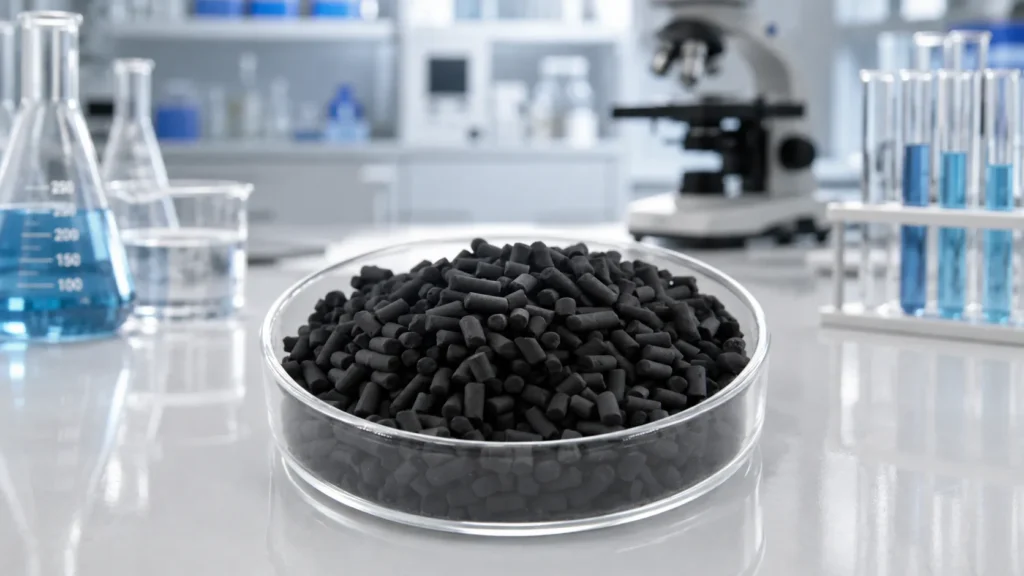
Coal-based pellet activated carbon is one of the most widely used products in the oil and gas industry.
Features:
- High mechanical strength
- Excellent abrasion resistance
- Low pressure drop
- Suitable for large fixed-bed adsorption systems
- Can be regenerated and reused
Main Applications:
- Natural gas purification
- VOC emission control
- Vapor Recovery Units (VRU)
- Refinery off-gas treatment
Due to its excellent gas-phase adsorption performance, it is highly effective for adsorbing organic vapors such as benzene, toluene, and xylene (BTX), making it a preferred choice in oil and gas facilities.
Contact me todayCoconut Shell Granular Activated Carbon
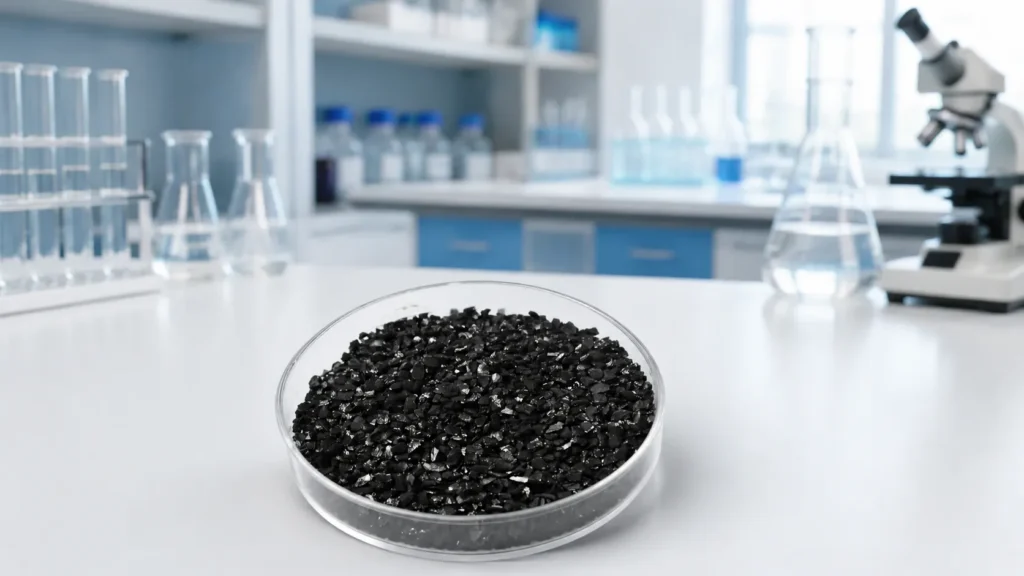
Coconut shell activated carbon features a highly developed microporous structure and a large surface area.
Features:
- High adsorption capacity
- Low ash content
- High purity
- Effective for removing low-concentration contaminants
Main Applications:
- Natural gas polishing
- Compressed Natural Gas (CNG) purification
- Liquefied Natural Gas (LNG) pretreatment
- Trace organic contaminant removal
- Water treatment systems
Its rich micropore structure makes it particularly effective for adsorbing small organic molecules and odor-causing compounds.
Contact me todayImpregnated Activated Carbon
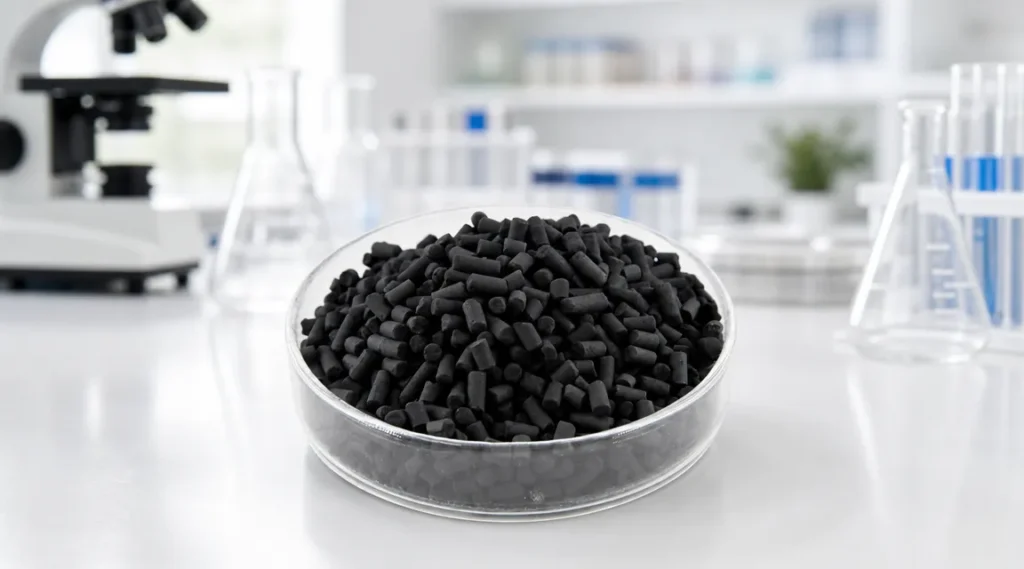
Impregnated activated carbon is produced by adding specific chemical agents to activated carbon to enhance its adsorption performance.
Common Impregnation Chemicals:
- Potassium iodide (KI)
- Potassium hydroxide (KOH)
- Sodium hydroxide (NaOH)
- Copper oxide (CuO)
- Sulfur-based compounds
Main Applications:
- Mercury removal from natural gas
- Hydrogen sulfide (H₂S) removal
- Mercaptan removal
- Acid gas treatment
Advantages:
- Combines physical adsorption and chemical adsorption
- Highly effective for trace contaminant removal
- Long service life
In LNG plants and natural gas processing facilities, impregnated activated carbon is often the key adsorbent used in mercury removal systems.
Contact me todayConclusion
Activated carbon is widely used in the oil and gas industry due to its excellent adsorption properties. Its applications range from gaseous pollutants such as hydrogen sulfide and mercury to amines, ethylene glycol, and liquid-phase issues in wastewater.
As a trusted supplier of activated carbon, TingyuanCarbon specializes in designing high-performance activated carbon products specifically for the oil and gas industry. Contact us today for free sample testing and customized solutions.