
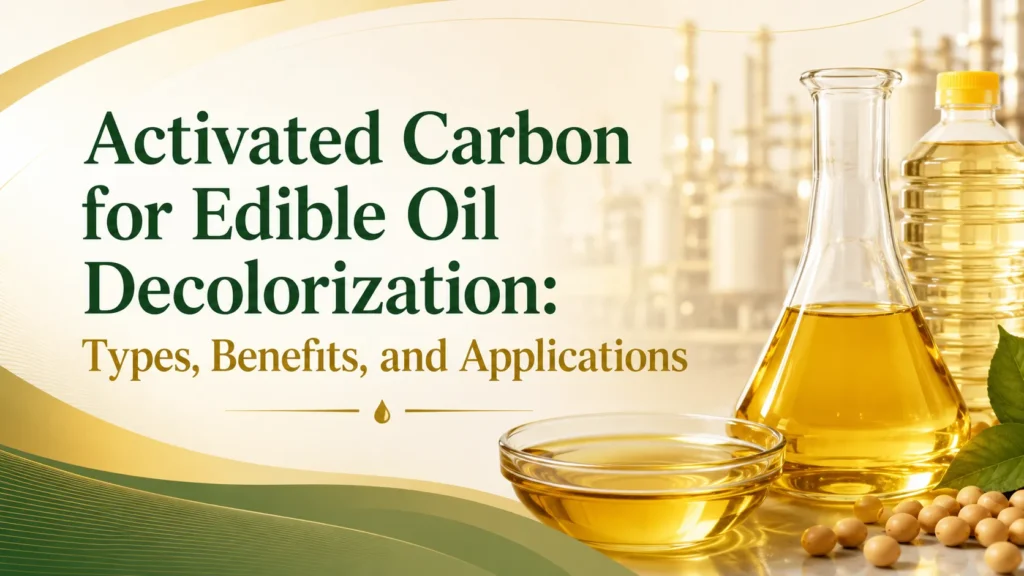
During the edible oil refining process, decolorization is a critical step that determines the appearance and overall quality of the final product. High-quality edible oils are expected to have a light color, minimal impurities, and excellent oxidative stability. Thanks to its outstanding adsorption performance, activated carbon has become an effective solution for edible oil decolorization.
In this article, we will explore how activated carbon is used in edible oil refining and help you choose the most suitable activated carbon for your production process.
Why Does Edible Oil Need Decolorization?
Crude vegetable oils obtained through pressing or solvent extraction usually contain a variety of natural pigments and impurities. These substances not only affect the color of the oil but can also reduce its overall quality.
Common impurities removed during decolorization include:
- Chlorophyll
- Carotenoids
- Flavonoid pigments
- Oxidation products
- Residual phospholipids
- Protein particles
- Gums
- Trace metal ions
- Polycyclic aromatic hydrocarbons (PAHs) (present in some edible oils)
If these impurities are not effectively removed, they may result in:
- Dark-colored oil
- Color reversion after light exposure
- Faster oxidation
- Shorter shelf life
- Unpleasant odors
- Lower product grade
- Reduced consumer acceptance
Therefore, decolorization not only improves the appearance of edible oil but also enhances its quality and extends its shelf life.
Contact me todayWhy Is Activated Carbon Suitable for Edible Oil Decolorization?
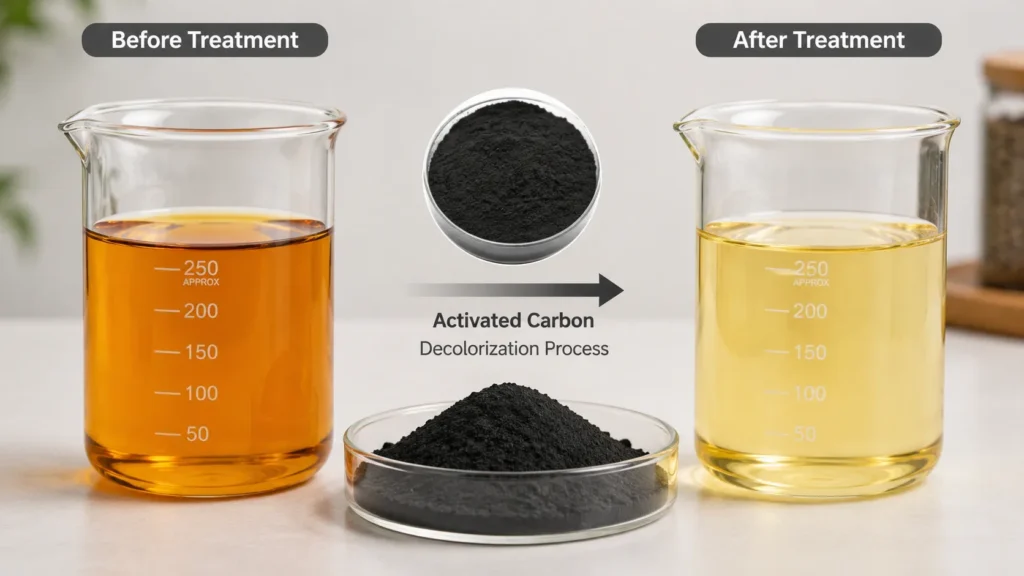
Activated carbon is a highly porous adsorbent material with an extensive pore structure. Its specific surface area typically ranges from 800 to 1,500 m²/g.
The combination of micropores, mesopores, and macropores creates an efficient adsorption network capable of removing impurities of different molecular sizes.
Its functions include:
Pigment Adsorption
Natural pigments can enter the pore structure of activated carbon and be retained through physical adsorption.
Typical pigments removed include:
- Chlorophyll
- Carotenoids
- Anthocyanins
- Flavonoid pigments
As a result, the color value of edible oil can be significantly reduced.
Removal of Organic Impurities
Activated carbon effectively adsorbs various organic contaminants, including:
- Oxidation by-products
- Polar organic compounds
- Trace residual solvents
- Certain pesticide residues (depending on the specific conditions)
This helps improve the purity of the refined oil.
Odor Removal
Some volatile organic compounds present in edible oils can produce undesirable odors such as:
- Rancid odor
- Burnt smell
- Grassy odor
- Stale odor
Activated carbon effectively removes these odor-causing compounds, reducing the burden on the subsequent deodorization process.
Improved Oxidative Stability
By removing impurities that promote oxidation, activated carbon can:
- Reduce the rate of peroxide value increase
- Delay rancidity
- Improve storage stability
- Extend shelf life
Types of Activated Carbon for Edible Oil Decolorization
Choosing the right activated carbon is essential for achieving optimal decolorization performance. TingyuanCarbon supplies high-quality wood powdered activated carbon specially developed for food and beverage decolorization applications.
Wood Powdered Activated Carbon
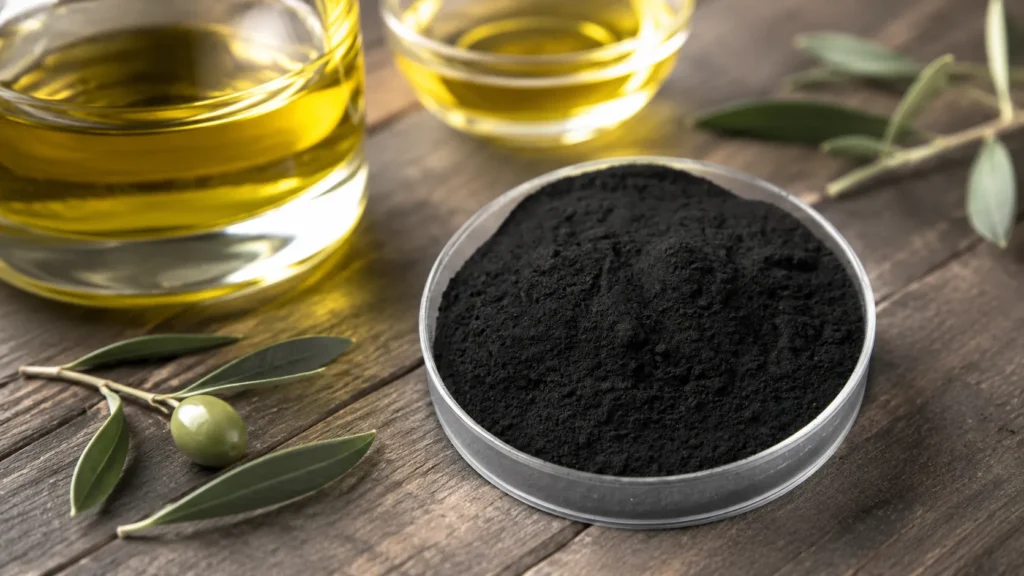
With its fine powder form, wood powdered activated carbon disperses rapidly throughout the oil, allowing maximum contact between the adsorbent and the liquid. Its well-developed mesoporous and macroporous structure enables large pigment molecules to enter the pores more easily, resulting in faster adsorption and excellent decolorization efficiency.
Because of these advantages, wood powdered activated carbon is widely used in both batch and continuous edible oil refining systems.
Product Features:
- Well-developed pore structure with abundant mesopores and macropores
- Large specific surface area and high adsorption capacity
- Excellent adsorption performance for natural plant pigments
- Fine particle size for superior dispersion and contact efficiency
- Simultaneously removes odors, organic impurities, and oxidation products
- High decolorization efficiency, helping reduce activated carbon dosage
- Easily integrated into existing decolorization processes and suitable for continuous industrial production
Typical Applications:
Wood powdered activated carbon is widely used for refining and decolorizing various vegetable oils, including:
- Soybean Oil
- Rapeseed Oil
- Peanut Oil
- Sunflower Oil
- Corn Oil
- Palm Oil
- Rice Bran Oil
- Cottonseed Oil
Key Factors Affecting Decolorization Performance
The effectiveness of activated carbon depends not only on product quality but also on the operating conditions of the refining process.
Activated Carbon Dosage
If the dosage is too low:
- Insufficient decolorization
If the dosage is too high:
- Increased production costs
- Higher oil loss
The optimal dosage should be determined through laboratory or pilot-scale testing based on the quality of the crude oil, its color, and the desired product specifications.
Contact Time
Generally, longer contact time allows more complete adsorption. However, excessive contact time may reduce production efficiency, so an appropriate balance should be maintained.
Temperature
An appropriate processing temperature can:
- Reduce oil viscosity
- Increase diffusion rates
- Improve adsorption efficiency
However, excessively high temperatures may accelerate oil oxidation, so the operating temperature should be carefully controlled.
Mixing Intensity
Adequate agitation helps to:
- Increase the contact area between activated carbon and oil
- Prevent activated carbon from settling
- Improve decolorization uniformity
Activated Carbon Quality
The following characteristics should be carefully evaluated when selecting activated carbon:
- Specific surface area
- Pore size distribution
- Ash content
- Moisture content
- Particle size
- Food-grade certification
- Heavy metal content
These factors directly influence both decolorization efficiency and food safety.
Conclusion
Activated carbon plays a vital role in edible oil refining by removing pigments, odors, oxidation products, and other impurities while improving the oxidative stability of the oil. Selecting the right food-grade activated carbon and optimizing the refining process can significantly improve decolorization efficiency, reduce production costs, and enhance the quality of the final edible oil.
Contact us today to find the ideal activated carbon solution for your edible oil decolorization application.