
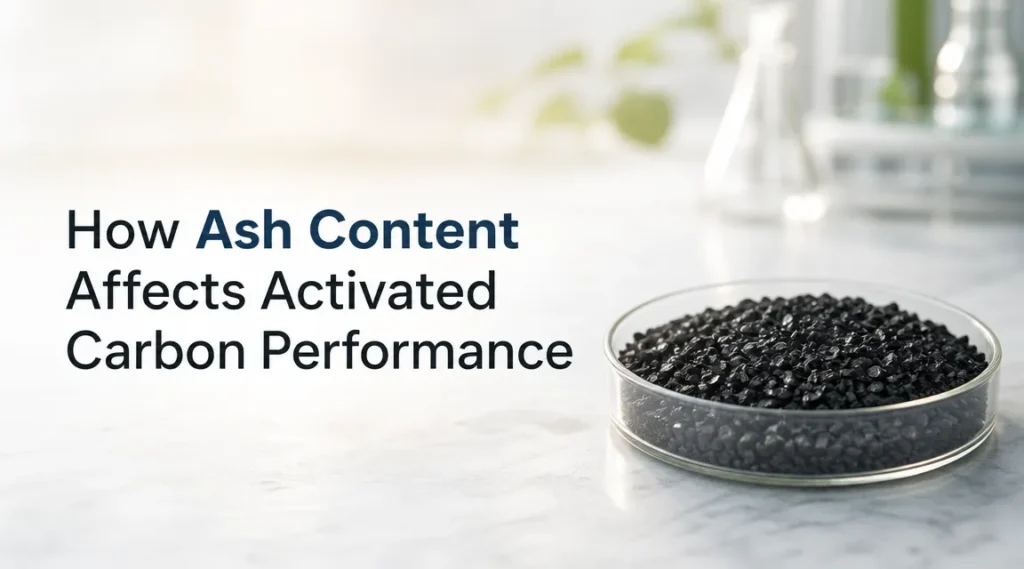
When evaluating activated carbon quality, buyers often focus on specifications such as iodine number, surface area, hardness, and particle size. However, one equally important parameter that should not be overlooked is ash content.
Ash content can significantly influence the adsorption efficiency, purity, and overall performance of activated carbon in various applications, especially in water treatment, food processing, pharmaceuticals, and precious metal recovery.
In this article, we explain what ash content is, why it matters, and how it affects activated carbon performance.
What Is Ash Content in Activated Carbon?
Ash content refers to the inorganic mineral residue that remains after activated carbon is completely burned at high temperatures.
These mineral components are naturally present in the raw materials or may be introduced during the manufacturing process. Common ash components include:
- Calcium
- Magnesium
- Silica
- Iron
- Aluminum
- Potassium
- Sodium
Ash content is usually expressed as a percentage (%) of the total activated carbon weight.
For example:
- Coconut shell activated carbon: typically 2–5% ash
- Coal-based activated carbon: typically 5–15% ash
- Wood-based activated carbon: varies depending on processing
Generally, lower ash content indicates higher purity.
Contact me todayHow Ash Content Is Measured
Ash content is determined by heating a measured quantity of activated carbon in a muffle furnace at approximately 650°C (1200°F) until all organic matter is burned off, leaving only the incombustible mineral residue. The ratio of the remaining ash mass to the original sample mass, multiplied by 100, gives the ash content percentage.
Industry standards such as ASTM D2866 (Standard Test Method for Total Ash Content of Activated Carbon) and equivalent ISO methods provide standardized procedures to ensure comparable results across different suppliers and laboratories.
Why Is Ash Content Important?
Although ash itself does not contribute to adsorption, it occupies space within the carbon structure and can negatively affect performance in several ways.
Reduces Adsorption Capacity
Activated carbon works because of its highly porous internal structure. High ash content can block or fill these pores, reducing the available surface area for adsorption.
This can lead to:
- Lower contaminant removal efficiency
- Reduced adsorption capacity
- Shorter service life
In many cases, lower ash content means more active adsorption sites.
Affects Product Purity
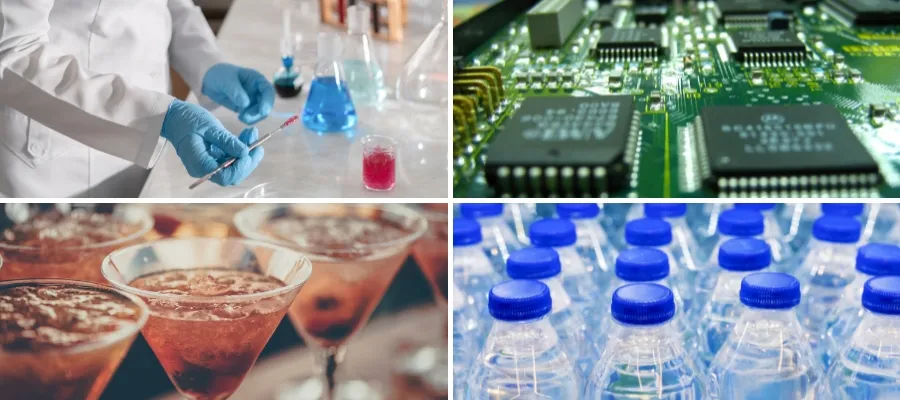
In sensitive industries such as pharmaceuticals, food processing, and electronics, ash can introduce unwanted impurities into the treated product.
Potential issues include:
- Mineral leaching
- Product contamination
- Changes in color or taste
- Failure to meet regulatory standards
For these applications, low-ash activated carbon is often essential.
Influences pH and Chemical Stability
Certain ash components can dissolve into liquids and affect pH levels.
This may cause:
- Increased alkalinity
- Chemical instability
- Reduced process consistency
In applications requiring precise chemical control, such as API purification or specialty chemicals, ash content becomes especially important.
Impacts Gold Recovery Efficiency
In gold recovery processes such as CIP, CIL, and CIC, high ash content can interfere with gold adsorption and desorption.
Low-ash coconut shell activated carbon is generally preferred because it offers:
- Higher gold loading capacity
- Reduced interference from mineral impurities
- Better regeneration performance
May Cause Equipment Fouling
Excess ash can contribute to:
- Dust generation
- Filter clogging
- Scale formation
- Increased maintenance costs
Lower ash carbon helps improve operational reliability.
Contact me todayTypical Ash Content by Activated Carbon Type
Different raw materials naturally produce different ash levels.
| Activated Carbon Type | Typical Ash Content |
|---|---|
| Coconut Shell Activated Carbon | 2–5% |
| Coal-Based Activated Carbon | 5–15% |
| Wood-Based Activated Carbon | 3–8% |
| Acid-Washed Activated Carbon | Lower than standard grades |
For applications requiring high purity, acid-washed activated carbon is often recommended to further reduce ash content.
What Is Acid-Washed Activated Carbon?
Acid washing is a post-treatment process used to remove excess mineral ash from activated carbon.
Benefits include:
- Lower ash content
- Improved purity
- Better adsorption performance
- Reduced pH impact
- Lower risk of contamination
Acid-washed carbon is commonly used in:
- Drinking water treatment
- Pharmaceutical production
- Food and beverage processing
- Semiconductor manufacturing
How to Evaluate Ash Content When Buying Activated Carbon
When selecting activated carbon, buyers should consider ash content alongside other specifications.
Questions to ask suppliers:
- What is the total ash percentage?
- Is the carbon acid-washed?
- What minerals are present in the ash?
- Does the ash affect my application?
- Can customized low-ash grades be supplied?
Understanding these details can help avoid performance problems later.
Choosing the Right Ash Level for Your Application
Different industries have different ash tolerance requirements.
Low Ash Preferred
Recommended for:
- Drinking water purification
- Food and beverage production
- Pharmaceutical processing
- Gold recovery
- Electronics manufacturing
Standard Ash Acceptable
Suitable for:
- General wastewater treatment
- Air purification
- Industrial gas treatment
- Some chemical processing applications
Choosing the appropriate ash level can improve both performance and cost efficiency.
Contact me todayConclusion
Ash content is a key yet often overlooked parameter in the selection of activated carbon. Although it does not directly contribute to adsorption, it significantly affects the purity, adsorption capacity, process stability and operational efficiency of activated carbon.
Before purchasing activated carbon, it is essential to carefully assess the ash content to ensure the product meets your technical and quality requirements. Please feel free to contact us to find the most suitable activated carbon product for your procurement needs.