
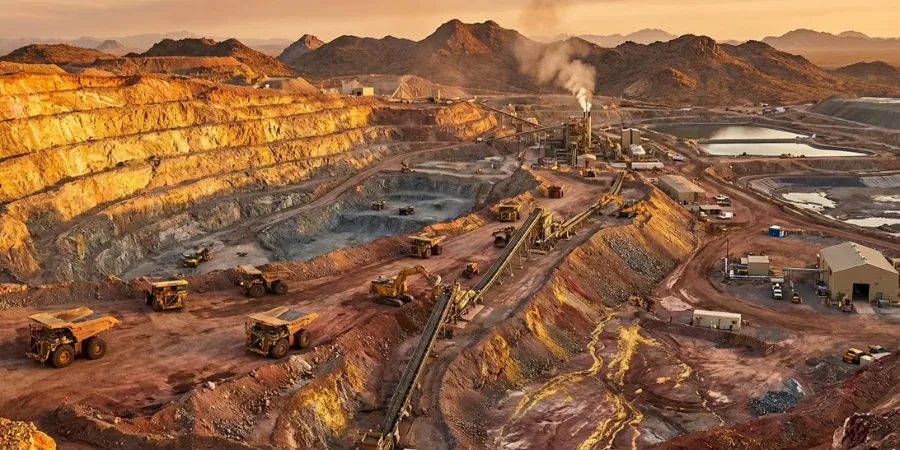
In gold extraction processes, the concentration of gold ions in the leaching solution is low, while impurities are abundant and competitive adsorption is severe. Therefore, the adsorption system has extremely high requirements for activated carbon.
Selecting the right activated carbon for gold recovery not only increases gold adsorption efficiency but also directly determines the gold loading capacity, elution efficiency, and carbon consumption cost.
This article provides a practical and in-depth explanation of the key performance indicators for gold recovery activated carbon: R-value, K-value, and hardness, along with professional procurement guidance.
Why Do Gold Mines Prefer Coconut Shell Activated Carbon?
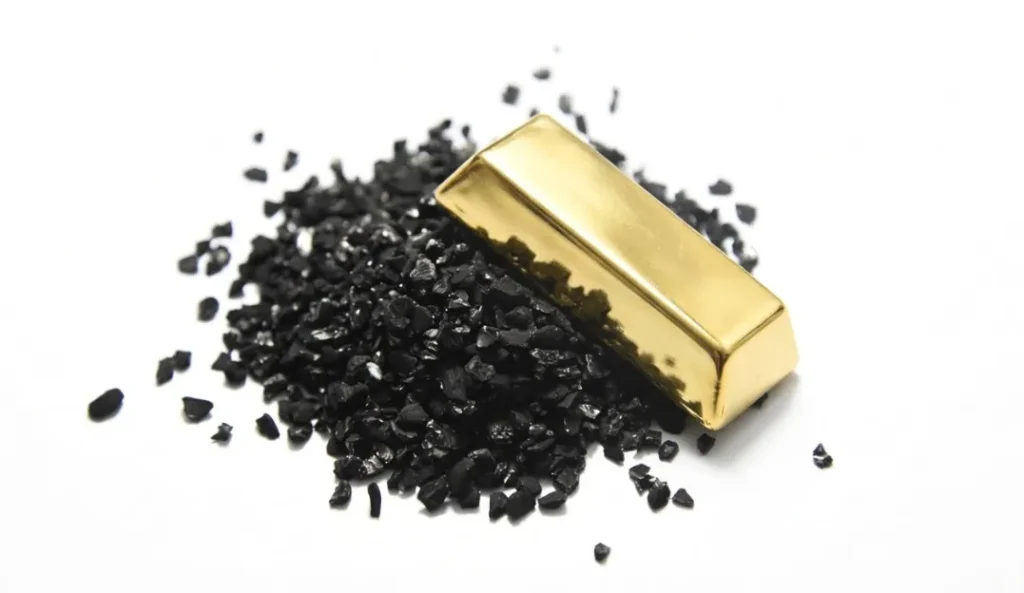
Coconut shell activated carbon is widely used in the gold mining industry because gold recovery processes require exceptionally high carbon performance, particularly:
- High micropore ratio
- High hardness
- Low attrition rate
- Ability to withstand continuous cycles
- High affinity for gold cyanide complexes
Microporous Structure of Coconut Shell Carbon Matches the Size of Gold Cyanide Complexes
After cyanide leaching, gold mainly exists in the form of the complex [Au(CN)₂]⁻, which has a small molecular radius suitable for adsorption in 0.4–2 nm micropores.
Coconut shell activated carbon offers:
- Well-developed microporous structure
- Uniform pore size distribution
- High selectivity for gold complexes with minimal competitive adsorption
Extremely High Hardness Means Lower Carbon Loss
In gold recovery operations, activated carbon is subjected to:
- Pumping
- Agitation
- Fluidization
- Repeated adsorption/desorption
- High-temperature elution
Coconut shell carbon typically has a hardness of 98–99%, providing excellent resistance to abrasion and enabling it to maintain particle integrity even after many cycles.
Contact me todayKey Performance Indicators in Gold Adsorption Systems: R-Value, K-Value, and Hardness
The core performance of activated carbon for gold recovery can be summarized into three main categories:
- Adsorption rate (R-value)
- Adsorption capacity (K-value)
- Mechanical strength (hardness)
These three indicators determine whether the activated carbon can efficiently adsorb gold ions, withstand repeated use, and maintain stable performance.
R-Value: A Key Indicator of Gold Adsorption Speed
The R-value measures how quickly activated carbon adsorbs gold complexes—an indicator of adsorption kinetics. A higher R-value means faster adsorption.
In CIP/CIL circuits, where leach solution flows quickly and residence time is limited, slow adsorption leads to:
- Incomplete gold adsorption
- Elevated gold in tailings
- Significant gold losses
- Need for more adsorption tanks
- Reduced production efficiency
A high R-value ensures:
- Efficient adsorption in every stage of the circuit
- Higher system throughput
- Reduced activated carbon consumption
- Lower energy usage
K-Value: Determines the Maximum Gold Loading Capacity
The K-value represents the maximum amount of gold that activated carbon can adsorb (its saturation capacity). A higher K-value means each ton of carbon can carry more gold.
The goal of adsorption tanks is to maximize loaded gold on carbon, thereby increasing:
- Gold recovered per unit of carbon
- Total gold production
- Gold yield per elution cycle
If the K-value is low:
- Each elution produces less gold
- Carbon consumption increases
- Operational efficiency decreases
- Production cost rises
High K-value activated carbon reduces elution frequency and improves overall plant efficiency.
Hardness: A Critical Indicator That Determines Carbon Life and Operating Cost
Hardness measures the abrasion resistance of activated carbon. In gold plants, mechanical actions such as agitation, pumping, and screening cause:
- Particle edge wear
- Surface peeling
- Carbon particle breakage
- Generation of carbon fines
Insufficient hardness results in:
- High carbon consumption
- Carbon fines entering slurry and affecting plant performance
- Gold loss carried by carbon fines
- Increased risk of system blockages
Thus, higher hardness means lower carbon loss and better process stability.
Contact me todayTingyuanCarbon: Supplying Premium Gold Recovery Carbon

To meet the stringent requirements of gold recovery operations worldwide, we specially produce high-quality gold recovery carbon for CIP / CIL / CIC processes.
By selecting premium raw materials, optimizing activation processes, and precisely controlling pore structure, our carbon consistently delivers industry-leading performance in adsorption rate, capacity, and durability.
Our coconut shell activated carbon offers the following advantages:
- High R-value for faster adsorption: Rich micropores and smooth diffusion pathways significantly improve gold uptake speed.
- High K-value for greater gold loading: Optimized pore structure increases saturation capacity and reduces elution frequency.
- Hardness ≥98%: Excellent resistance to wear and breakage, dramatically reducing carbon loss and operating cost.
- Uniform particle size with low impurities: Ensures stable performance without screen blocking, suitable for all gold recovery processes.
With stable performance and superior adsorption efficiency, our coconut shell activated carbon enables gold mines to achieve faster adsorption, higher gold recovery rates, and lower overall costs—earning trust and recognition from customers worldwide.
Contact us today to request a free sample and the best quotation.