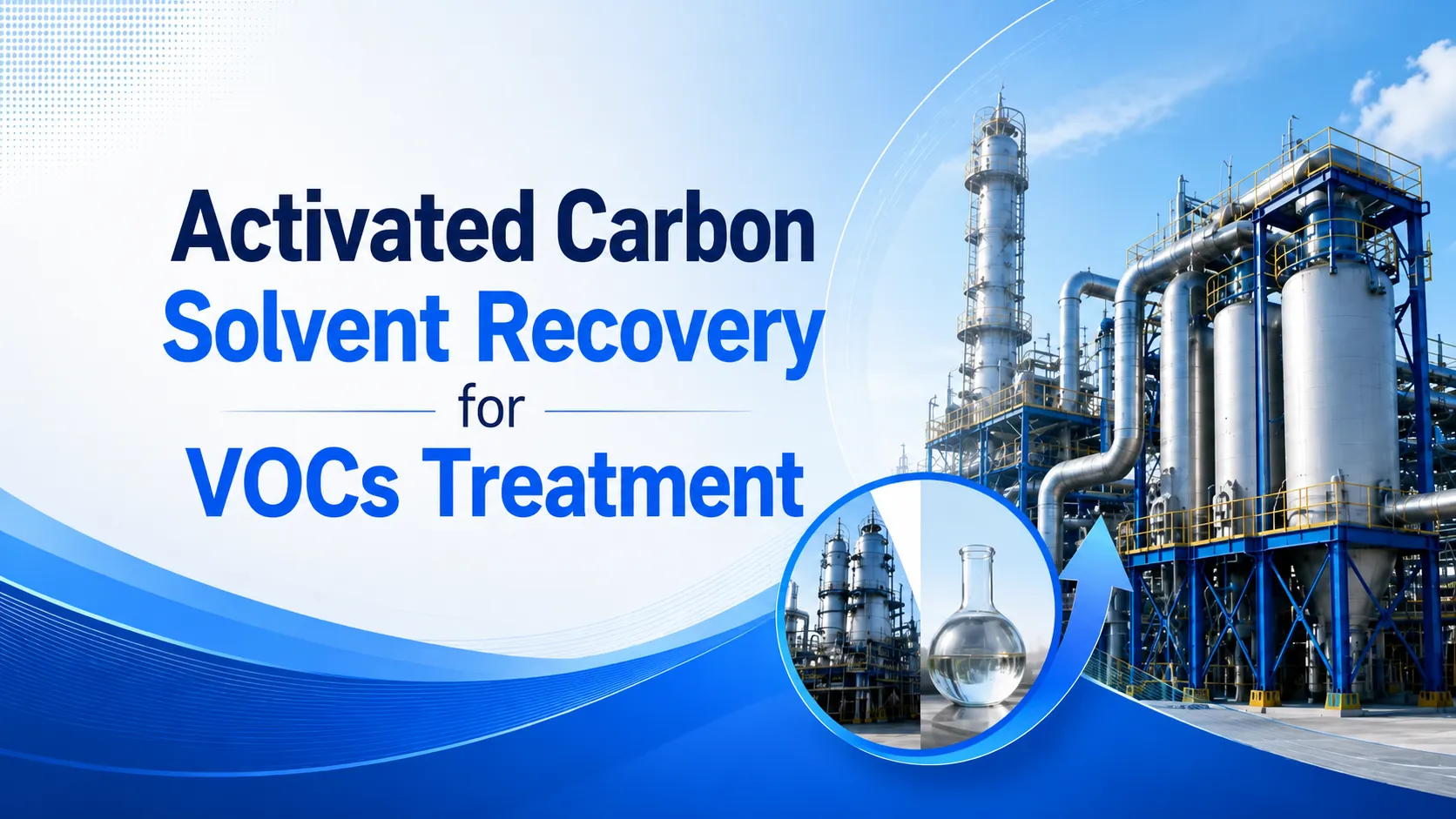

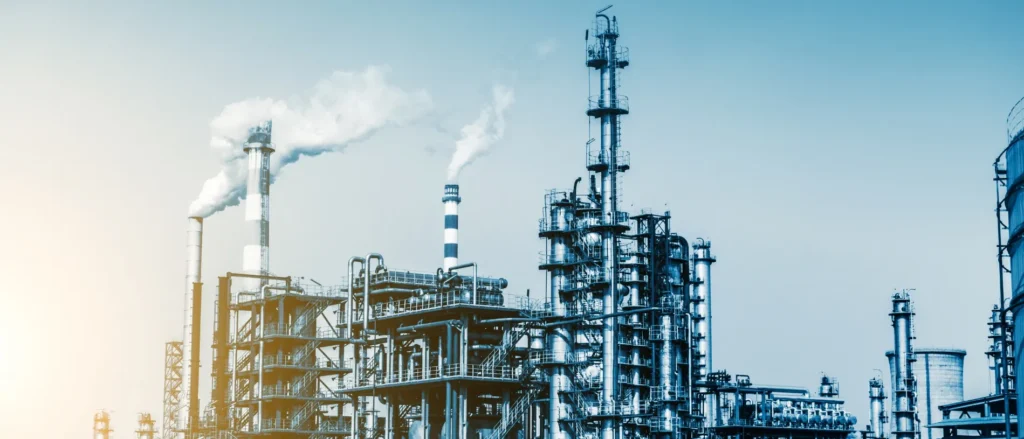
In industrial air treatment applications, activated carbon achieves a VOC removal efficiency of 95%–99%, making it one of the most effective solutions for paint booths, printing works and chemical plants.
This guide explains how activated carbon removes volatile organic compounds through adsorption and provides selection recommendations based on your specific VOC composition and airflow requirements.
What Are Volatile Organic Compounds (VOCs)?

Volatile Organic Compounds (VOCs) are organic chemicals that evaporate easily at room temperature and quickly enter the air. They have high vapor pressure and low boiling points, allowing them to continuously release into the air during production, storage, or use.
Common VOCs include:
- Benzene series: benzene, toluene, xylene (most common in industrial production)
- Aldehydes: formaldehyde, acetaldehyde (heavily emitted from building materials and adhesives)
- Ketones: acetone, methyl ethyl ketone (typical solvent VOCs)
- Alcohols: ethanol, isopropanol
- Alkanes: n-hexane, cyclohexane
- Other organic solvents: ethyl acetate, ethylbenzene, chloroform, etc.
These compounds have broad sources across daily life and industrial production.
Major Sources of VOCs
- Painting and coating factories (automotive, furniture, metal coating)
- Chemical industry (solvents, resins, coatings)
- Pharmaceutical manufacturing
- Printing & packaging
- Rubber, plastics, electronics manufacturing
- Renovation materials (paint, glue, boards, flooring)
- Furniture (formaldehyde released from man-made boards)
- Cleaning agents and cosmetics
- Cooking fumes
Hazards of VOCs
Long-term VOC exposure may lead to:
- Eye, nose, and throat irritation
- Headaches, fatigue, respiratory issues
- Increased allergic reactions
- Some VOCs are carcinogenic (e.g., benzene, formaldehyde)
- Participate in photochemical reactions to produce ozone, causing smog
Therefore, using activated carbon to remove VOCs is essential.
Contact me todayThe Role of Activated Carbon in VOC Removal
Activated carbon plays a key role in efficiently removing VOCs due to its superior adsorption performance.
How Activated Carbon Removes VOCs
Activated carbon removes VOCs mainly through a process called adsorption, in which VOC molecules are captured and retained on the carbon surface.
- Physical adsorption: Uses Van der Waals forces to capture VOC molecules, ideal for non-polar VOCs such as benzene and toluene.
- Chemical adsorption: VOCs chemically react with functional groups on the carbon surface, suitable for polar or highly reactive VOCs (e.g., formaldehyde).
Advantages of Activated Carbon for VOC Removal
- High adsorption efficiency for benzene, toluene, aldehydes (such as formaldehyde), and mixed TVOCs
- Effective even at low concentrations
- Low airflow resistance and long service life, especially for pellet activated carbon
- Strong adaptability to various VOC mixtures and fluctuating concentrations
Types of Activated Carbons for VOC Removal
Choosing the right activated carbon is crucial for VOC removal efficiency. Tingyuan Carbon provides high-performance activated carbon specially designed for VOC purification.
Granular Activated Carbon
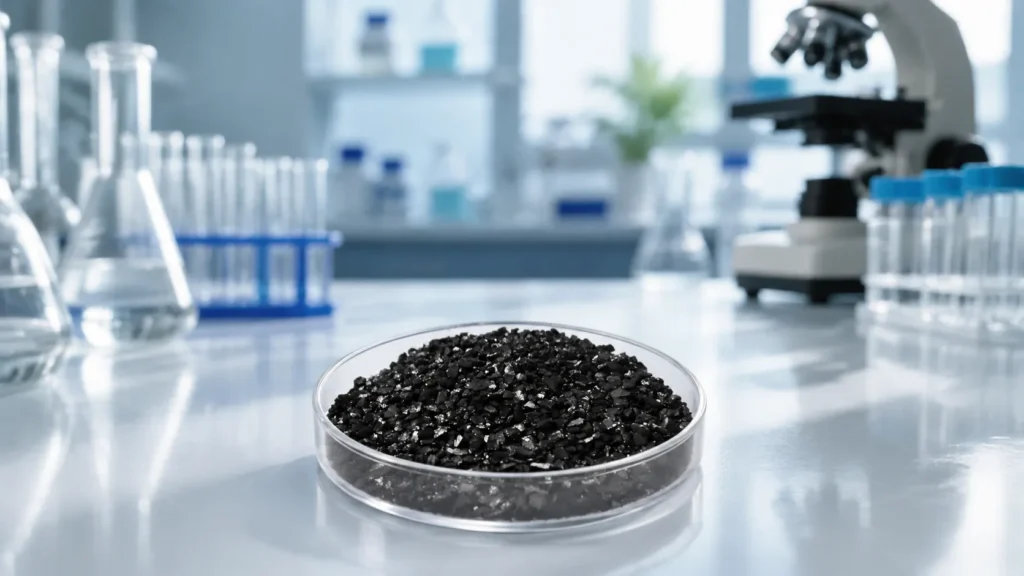
Granular activated carbon is widely used for VOC removal due to its durable structure and high adsorption efficiency. It has an irregular particle shape with high surface area and a rich pore structure.
Features & Advantages:
- Rich microporous structure – ideal for small-molecule VOCs like benzene, toluene, TVOCs
- Fast adsorption rate – small particles, large surface area
- Suitable for low to medium concentration VOCs
- Widely used in filters, air purifiers, and odor-removal packaging
Typical Applications:
- Indoor air purification (formaldehyde, TVOCs)
- Paint shops, furniture factories, spray booths
- Chemical plants with general-purpose VOCs
- Activated carbon filter boxes and air treatment units
Pellet Activated Carbon
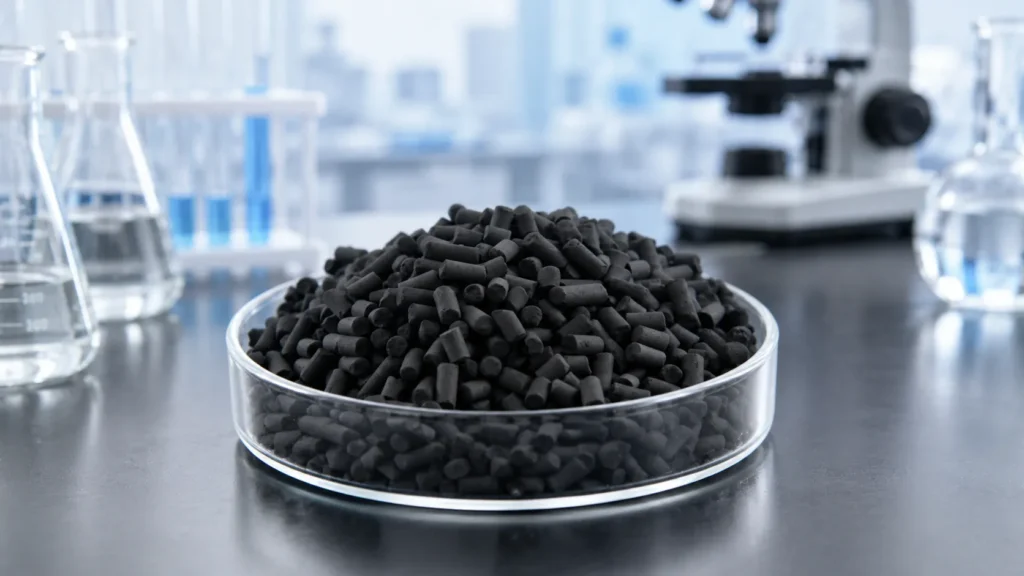
Pellet activated carbon is commonly made from high-quality coal. It has high mechanical strength and low dust generation, making it the most widely used type in industrial VOC treatment.
Features & Advantages:
- High mechanical strength, low breakage
- Low airflow resistance – ideal for large airflow systems
- High adsorption capacity
- Long service life
Typical Applications:
- Spray booth VOC emissions
- Automotive manufacturing, metal coating lines
- Medium and high concentration VOCs in chemical plants
- Pharmaceutical exhaust systems
- Large-scale industrial adsorption towers
Impregnated Activated Carbon
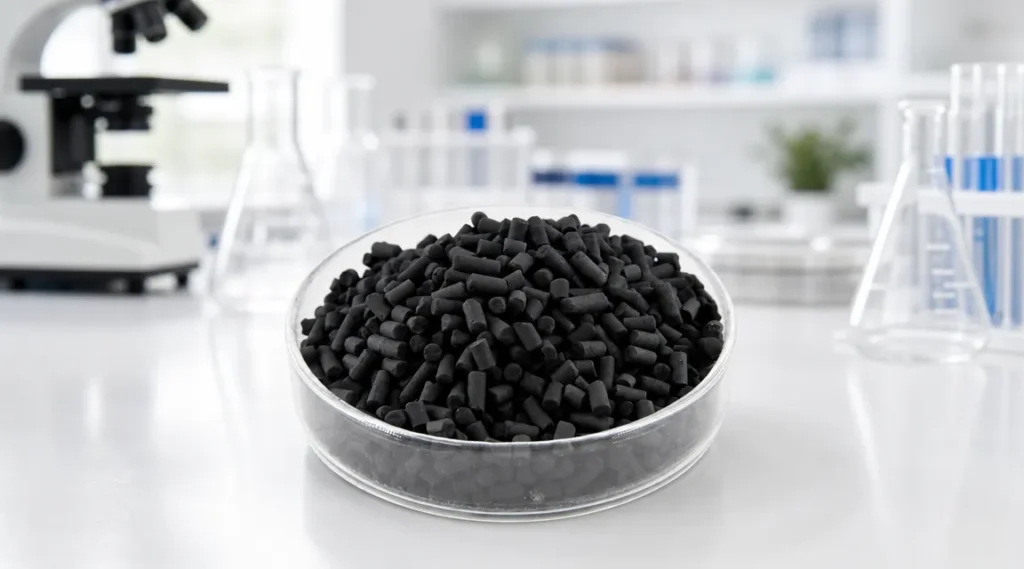
Impregnated activated carbon is made by loading chemical agents such as KOH, NaOH, KMnO₄, giving it chemical reactivity to treat VOCs and odors that regular activated carbon cannot adsorb effectively.
Features & Advantages:
- Ideal for polar VOCs (aldehydes, ketones, oxygen-containing compounds)
- Highly effective for odor gases (H₂S, mercaptans, ammonia, amines)
- Dual action: adsorption + chemical neutralization
- Best for specialized odor control systems
Typical Applications:
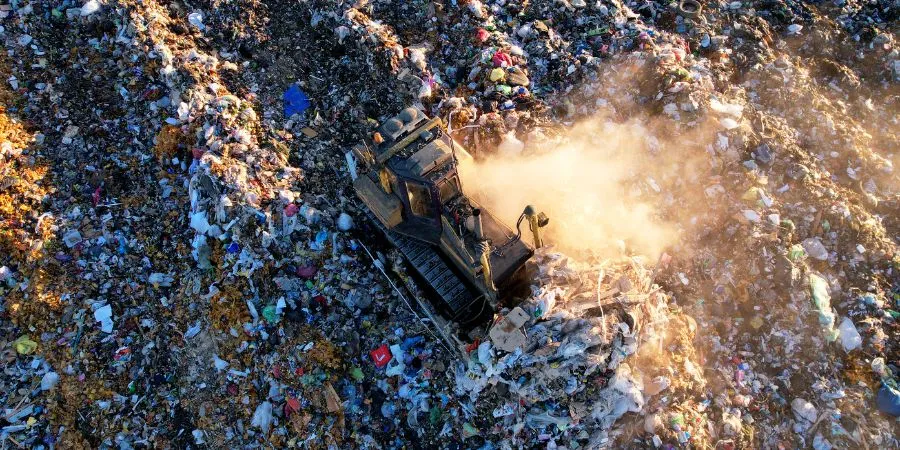
- Landfill odor treatment
- Sewage treatment plant odor control
- Special VOCs in pharmaceutical & chemical industries
- Laboratory ventilation systems
- Commercial kitchen fumes, sewer odor removal
- Large odor control filters and cartridges
Conclusion
Activated carbon offers a proven and efficient solution for industrial VOC control, achieving removal rates of 90-99% across various applications. The choice between granular, pellet, and impregnated activated carbon depends on your specific VOC composition, concentration levels, and operational requirements.
Need technical datasheet for VOC removal project? Contact our engineering team.