
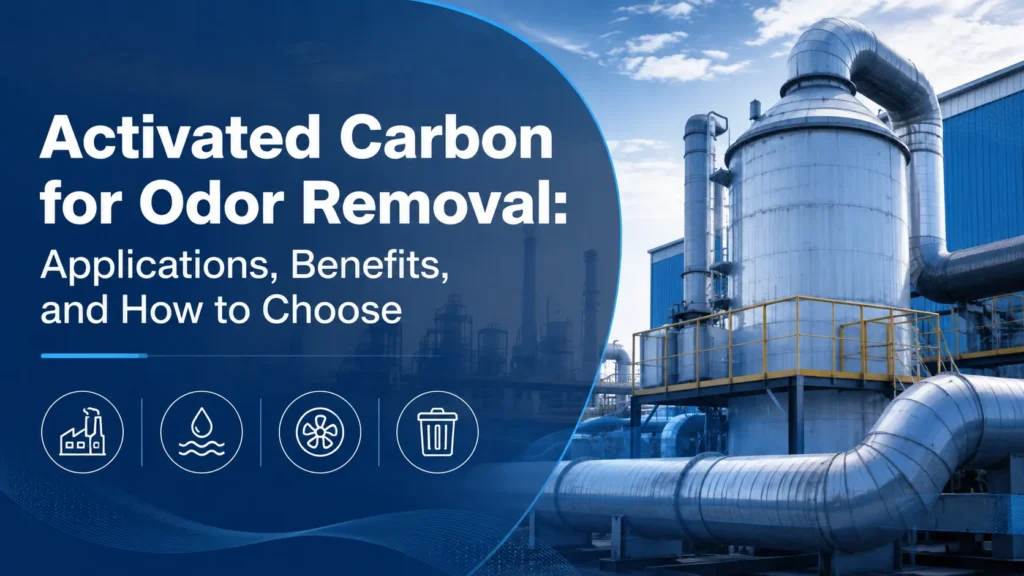
Unpleasant odors not only reduce environmental comfort but also often indicate the presence of harmful gases such as volatile organic compounds (VOCs), sulfur compounds, ammonia, and other airborne pollutants.
Thanks to its exceptional adsorption capacity, activated carbon has become one of the most effective materials for odor control. This article explains how activated carbon removes odors, its major applications, and how to choose the right activated carbon for your odor control system.
How Does Activated Carbon Remove Odors?
Activated carbon is produced from carbon-rich raw materials such as coconut shells, coal, and wood through a high-temperature activation process. During activation, millions of microscopic pores are created, giving activated carbon an enormous surface area of 800–1,500 m²/g.
When odorous air passes through an activated carbon bed:
- Odor molecules enter the pore structure of the activated carbon.
- Pollutants are trapped on the carbon surface through physical adsorption.
- For certain difficult-to-remove gases, impregnated activated carbon provides enhanced removal through chemical adsorption, where chemical reactions convert harmful gases into stable compounds.
This process continuously removes odors without adding any chemicals to the air.
What Odor-Causing Gases Can Activated Carbon Remove?
Activated carbon effectively adsorbs a wide range of odor-causing contaminants, including:
| Odorous Gas | Common Sources |
|---|---|
| Hydrogen Sulfide (H₂S) | Wastewater treatment plants, landfills, biogas systems |
| Ammonia (NH₃) | Livestock farms, fertilizer plants |
| Mercaptans | Petroleum processing, pulp and paper industry |
| VOCs (Volatile Organic Compounds) | Paints, printing, chemical manufacturing, solvents |
| Amines | Pharmaceutical and chemical production |
| Organic Odors | Food processing, composting facilities |
| Smoke Odors | Industrial exhaust, indoor air purification |
For gases that are difficult to remove through physical adsorption alone, impregnated activated carbon is typically recommended.
Contact me todayApplications of Activated Carbon in Odor Control
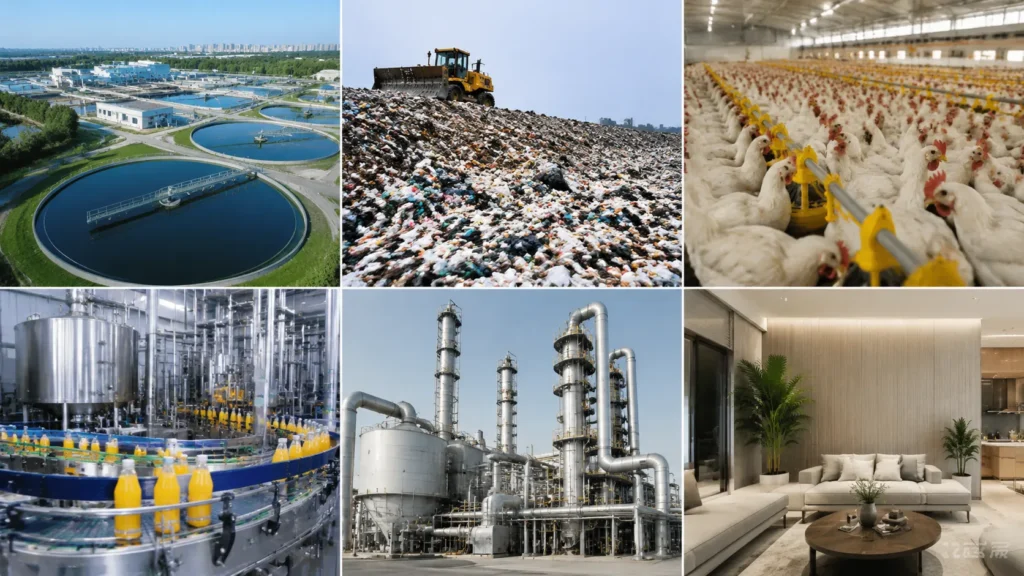
Thanks to its outstanding adsorption performance, activated carbon is widely used in various odor control applications.
Wastewater Treatment Plant Odor Control
Wastewater treatment facilities are among the largest sources of unpleasant odors.
Major odor pollutants include:
- Hydrogen sulfide (H₂S)
- Ammonia
- Organic sulfur compounds
- VOCs
Activated carbon is commonly installed in:
- Pumping stations
- Sludge treatment areas
- Exhaust ventilation systems
- Screening rooms
- Equalization tanks
Landfill Odor Control
As organic waste decomposes, landfills continuously release unpleasant gases.
Common pollutants include:
- Hydrogen sulfide
- Mercaptans
- VOCs
- Methane-associated odor compounds
Activated carbon is widely used in:
- Landfill gas purification
- Ventilation systems
- Gas collection stations
- Leachate treatment facilities
Livestock Farm Odor Control
Livestock operations generate large amounts of:
- Ammonia
- Hydrogen sulfide
- Amines
- Volatile organic acids
Typical applications include:
- Pig farms
- Poultry farms
- Dairy farms
- Composting facilities
Food Processing Industry
Food processing often generates strong odors during production, including:
- Fried food processing
- Meat processing
- Seafood processing
- Coffee roasting
- Spice manufacturing
Activated carbon is commonly used in:
- Commercial kitchen exhaust systems
- Food processing plants
- Meat processing facilities
- Packaging workshops
Chemical Industry Exhaust Gas Treatment
Chemical manufacturing often releases:
- Solvent vapors
- VOCs
- Amines
- Sulfur compounds
- Acid gases
Activated carbon adsorption systems effectively remove these contaminants and reduce emission concentrations.
Typical applications include:
- Paint factories
- Pharmaceutical plants
- Resin production
- Adhesive manufacturing
- Printing industry
Composting Facilities
During the decomposition of organic waste, composting operations release:
- Ammonia
- Hydrogen sulfide
- Organic acids
- VOCs
Activated carbon combined with biological filtration systems can significantly reduce odor emissions and minimize environmental impact.
Indoor Air Purification
Activated carbon is widely used in:
- Air purifiers
- HVAC systems
- Office buildings
- Hospitals
- Hotels
- Shopping malls
It effectively removes:
- Smoke odors
- Kitchen odors
- Pet odors
- Formaldehyde
- VOCs
- Renovation odors
Common Types of Activated Carbon for Odor Control
Choosing the right activated carbon is essential for achieving optimal purification performance. TingyuanCarbon offers high-quality activated carbon products specifically designed for odor control applications.
Coconut Shell Activated Carbon
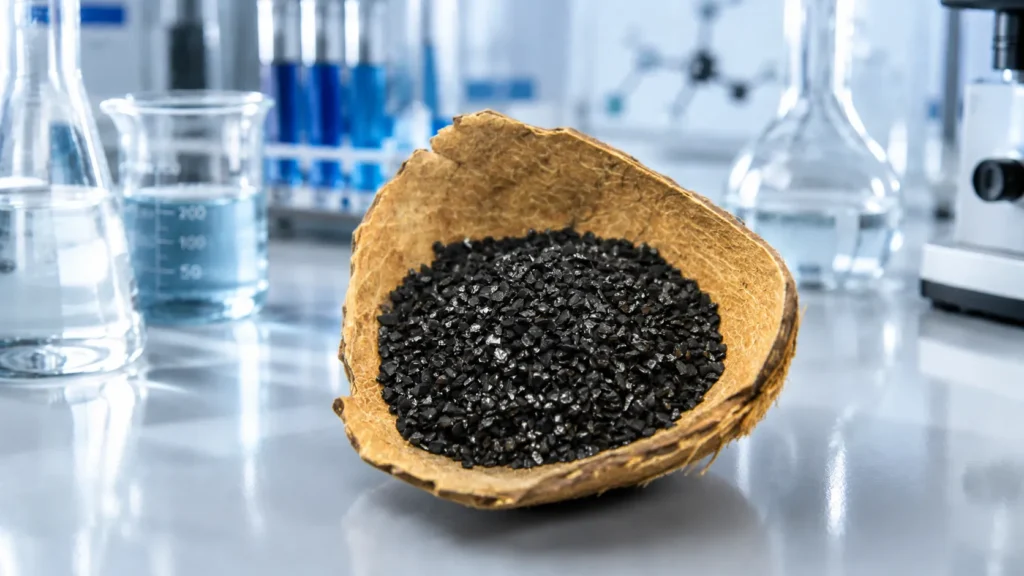
Coconut shell activated carbon features a highly developed microporous structure, making it one of the most popular materials for air purification.
Features:
- Excellent adsorption capacity
- Low ash content
- High hardness
- Long service life
- Particularly suitable for low-concentration odors and VOC adsorption
Applications:
- Air purifiers
- HVAC systems
- Indoor air purification
- VOC control
- Solvent recovery
Pellet Activated Carbon
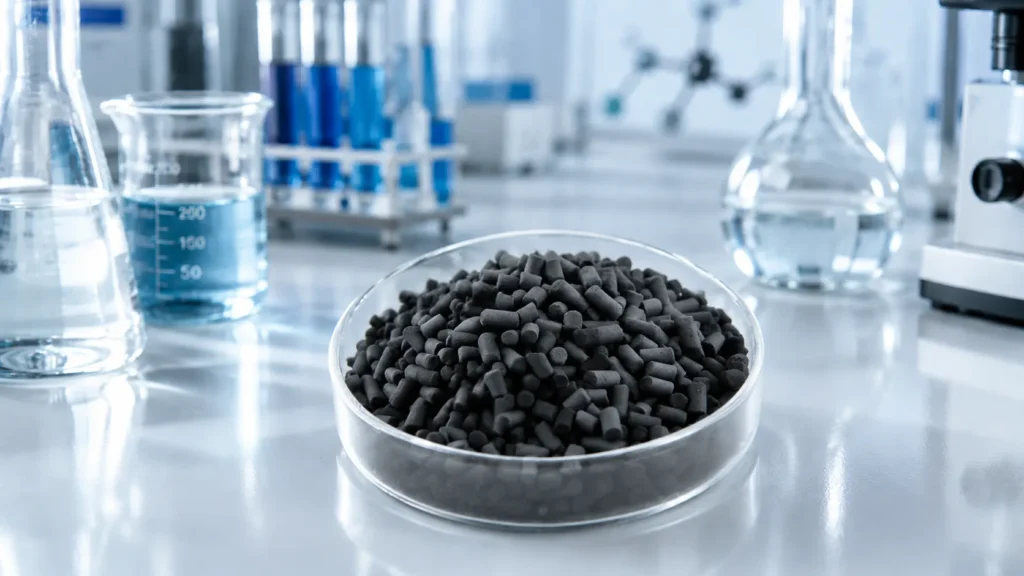
Pellet activated carbon features a uniform cylindrical shape with low airflow resistance, making it ideal for continuous gas purification systems.
Features:
- Low pressure drop
- High mechanical strength
- Excellent abrasion resistance
- Regenerable
- Stable performance during continuous operation
Applications:
- Industrial exhaust gas treatment
- VOC adsorption
- Chemical industry
- Odor control adsorption towers
Granular Activated Carbon
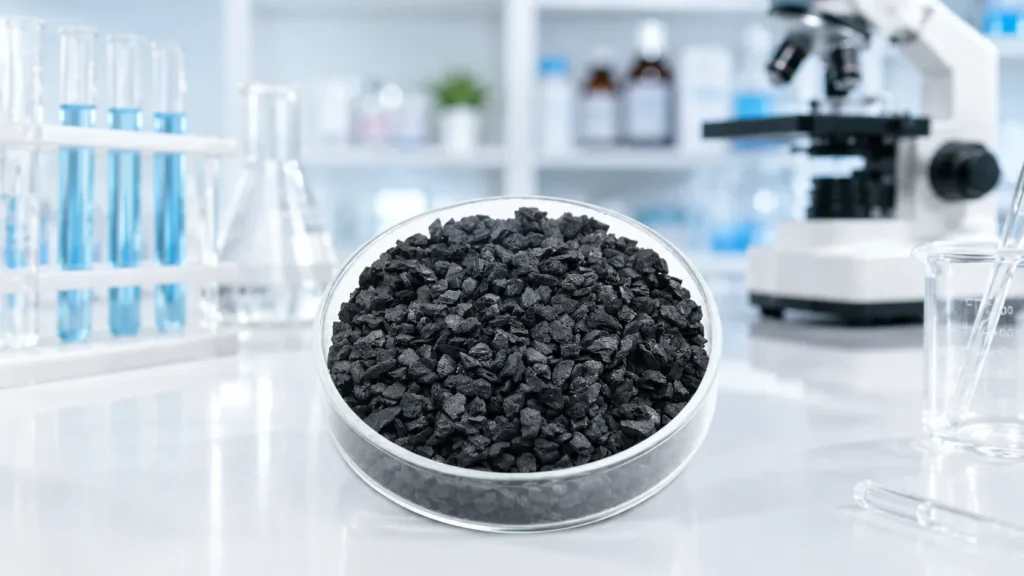
Granular activated carbon combines excellent adsorption capacity with good airflow characteristics.
Features:
- Available in various particle sizes
- Easy replacement
- Suitable for large adsorption systems
- High adsorption capacity
Applications:
- Wastewater treatment plants
- Landfill gas purification
- Industrial ventilation systems
- Air filtration equipment
Impregnated Activated Carbon
Impregnated activated carbon is manufactured by adding special chemicals such as potassium iodide (KI), potassium permanganate (KMnO₄), or sodium hydroxide (NaOH) to standard activated carbon. This allows it to remove specific pollutants through both physical and chemical adsorption.
Advantages:
- Higher removal efficiency for specific gases
- Longer service life
- Better performance in high-humidity environments
- Effective removal of corrosive gases
Suitable for Removing:
- Hydrogen sulfide (H₂S)
- Ammonia (NH₃)
- Sulfur dioxide (SO₂)
- Nitrogen oxides (NOₓ)
- Formaldehyde
- Acid gases
Applications:
- Wastewater treatment plants
- Biogas purification
- Chemical plants
- Semiconductor manufacturing
- Laboratories
- Emergency air filtration systems
How to Choose the Right Activated Carbon
Several factors should be considered when selecting activated carbon for odor control.
Identify the Target Gas
Different contaminants require different types of activated carbon.
For example:
- Hydrogen sulfide (H₂S): Potassium iodide (KI) or potassium permanganate (KMnO₄) impregnated activated carbon
- Ammonia (NH₃): Sodium hydroxide (NaOH) impregnated activated carbon
- VOCs: Coal-based pellet activated carbon
- Indoor odors: Coconut shell activated carbon
Consider Airflow Rate
For large airflow systems, pellet activated carbon is generally preferred because of its lower pressure drop and excellent long-term performance.
Consider Humidity
High humidity can reduce the adsorption efficiency of standard activated carbon. In these environments, impregnated activated carbon is recommended for improved odor removal performance.
Evaluate Replacement Frequency
The service life of activated carbon depends on several factors, including:
- Odor concentration
- Airflow rate
- Humidity
- Temperature
- Carbon bed depth
- Operating time
Working with an experienced activated carbon supplier helps determine the optimal replacement schedule based on your operating conditions.
Why Choose TingyuanCarbon?
As a professional activated carbon manufacturer, we provide:
- High-quality activated carbon products
- Customized impregnated activated carbon solutions for different gas treatment requirements
- Strict quality control for consistent performance
- Multiple particle sizes and specifications
- OEM and custom packaging services
- Professional technical support and product selection assistance
- Factory-direct pricing
- Fast worldwide shipping
Whether you operate a wastewater treatment plant, landfill, chemical facility, livestock farm, or manufacture air purification equipment, TingyuanCarbon can provide reliable and efficient activated carbon solutions for odor control. Contact us today for expert advice and a competitive quotation.
Frequently Asked Questions
Can activated carbo remove all odors?
Activated carbon effectively removes most common odors. However, for certain highly reactive gases, impregnated activated carbon is recommended to achieve higher removal efficiency.
How often should activated carbon be replaced?
Replacement frequency depends on odor concentration, airflow, humidity, and operating conditions. Once the activated carbon becomes saturated, it should be replaced or regenerated promptly.
Which activated carbon is best for removing hydrogen sulfide (H₂S)?
Potassium iodide (KI) impregnated activated carbon and potassium permanganate (KMnO₄) impregnated activated carbon are generally recommended because they provide significantly higher H₂S removal efficiency.
Is activated carbon an environmentally friendly material?
Yes. Activated carbon is an environmentally friendly and highly efficient adsorption material. Many activated carbon products can be thermally regenerated and reused, reducing operating costs and minimizing waste.