
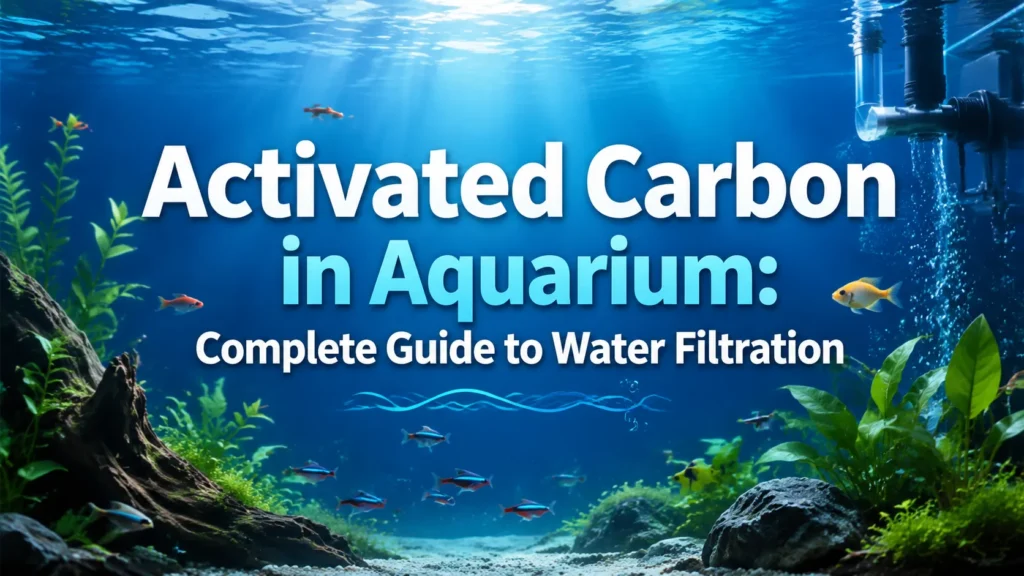
Activated carbon is one of the most widely used filtration media in aquarium life support systems. Whether you’re maintaining a freshwater community tank or a complex reef aquarium, understanding how activated carbon works and when to use it can significantly improve water quality and fish health.
In this article, we examine the use of activated carbon in aquariums, its key benefits, and the best types of activated carbon for aquarium filtration.
Why Water Quality Matters in Aquariums
Over time, aquarium water accumulates various contaminants, including:
- Fish waste
- Uneaten food
- Dissolved organic compounds
- Medication residues
- Tannins from driftwood
- Unpleasant odors
- Yellowing compounds
If these contaminants are not removed, they can reduce water clarity, stress aquatic life, and negatively impact the overall aquarium ecosystem.
Activated carbon provides an effective solution by adsorbing many of these unwanted substances from the water.
How Activated Carbon Works in Aquarium Filtration
Activated carbon contains millions of microscopic pores that create an enormous internal surface area.
When aquarium water passes through activated carbon:
- Dissolved organic compounds are trapped inside the pores.
- Odor-causing substances are removed.
- Yellowing agents and pigments are adsorbed.
- Residual medications can be eliminated after treatment.
- Water becomes clearer and more visually appealing.
Unlike mechanical filtration, which removes suspended particles, activated carbon focuses on removing dissolved contaminants.
Contact me todayWhat Is Activated Carbon Used for in Aquariums?
Thanks to its excellent adsorption properties, activated carbon performs exceptionally well in purifying the water in aquariums.
Improves Water Clarity
Activated carbon effectively removes dissolved organic compounds that cause water discoloration.
Benefits include:
- Crystal-clear water
- Improved visibility
- Enhanced appearance of fish and plants
Clear water also allows aquarium lighting to penetrate more effectively.
Removes Unpleasant Odors
Organic waste decomposition can generate undesirable smells.
Activated carbon adsorbs odor-causing compounds, helping maintain fresh-smelling aquarium water.
Eliminates Residual Medications
Many aquarium treatments leave chemical residues in the water.
After medication treatment is complete, activated carbon can help remove:
- Antibiotics
- Fish medications
- Chemical treatments
- Water conditioners
This prevents prolonged exposure of aquatic life to unnecessary chemicals.
Reduces Harmful Organic Compounds
Fish waste and decaying food release dissolved organic substances that can affect water quality.
Activated carbon helps reduce these compounds, contributing to a healthier aquatic environment.
Removes Tannins from Driftwood
Natural driftwood often releases tannins that turn water yellow or brown.
Activated carbon can effectively adsorb tannins and restore water clarity without removing the decorative wood.
Contact me todayBest Types of Activated Carbon for Aquariums
Choosing the right activated carbon is crucial for effective treatment. TingyuanCarbon offers the following high-quality activated carbon products for aquariums.
Coconut Shell Granular Activated Carbon
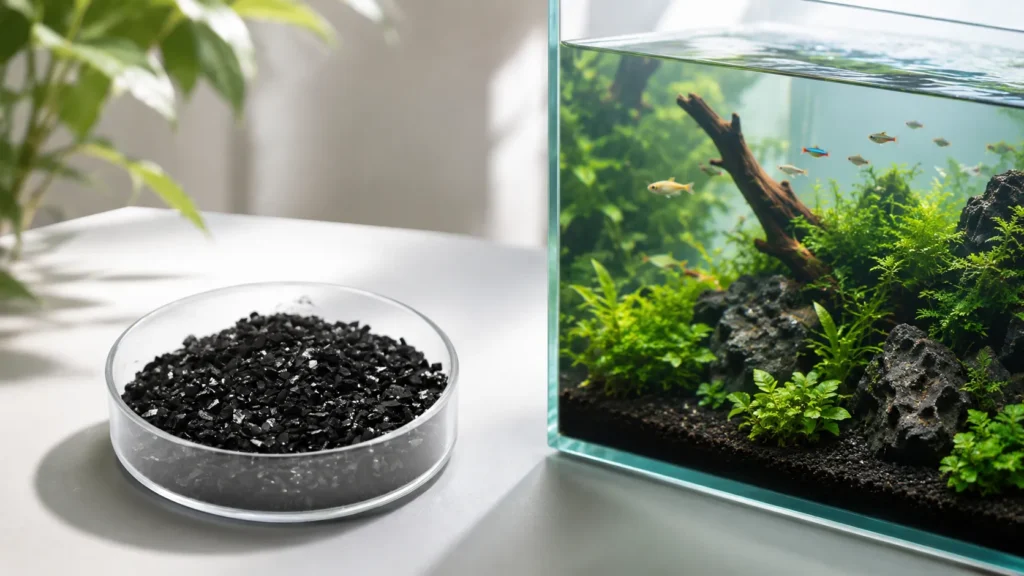
Coconut shell granular activated carbon is manufactured from high-quality coconut shells through carbonization and activation processes. With its highly developed microporous structure, high mechanical strength, and low ash content, it is one of the most popular activated carbon products for aquarium filtration.
Key Features:
- Rich microporous structure with excellent adsorption capacity
- Low ash content, minimizing impact on water quality
- Low dust generation, reducing water turbidity
- High hardness and long service life
- Suitable for freshwater, marine, and reef aquariums
In aquarium filtration, coconut shell activated carbon effectively removes dissolved organic compounds, medication residues, odors, and yellowing substances that can affect water clarity. As a result, it helps maintain crystal-clear water and enhances the overall appearance of the aquarium.
For marine and reef aquariums, premium coconut shell activated carbon is especially valued because of its low phosphate content, which helps maintain stable water conditions and supports a healthy aquatic ecosystem.
Contact me todayCoal-Based Pellet Activated Carbon
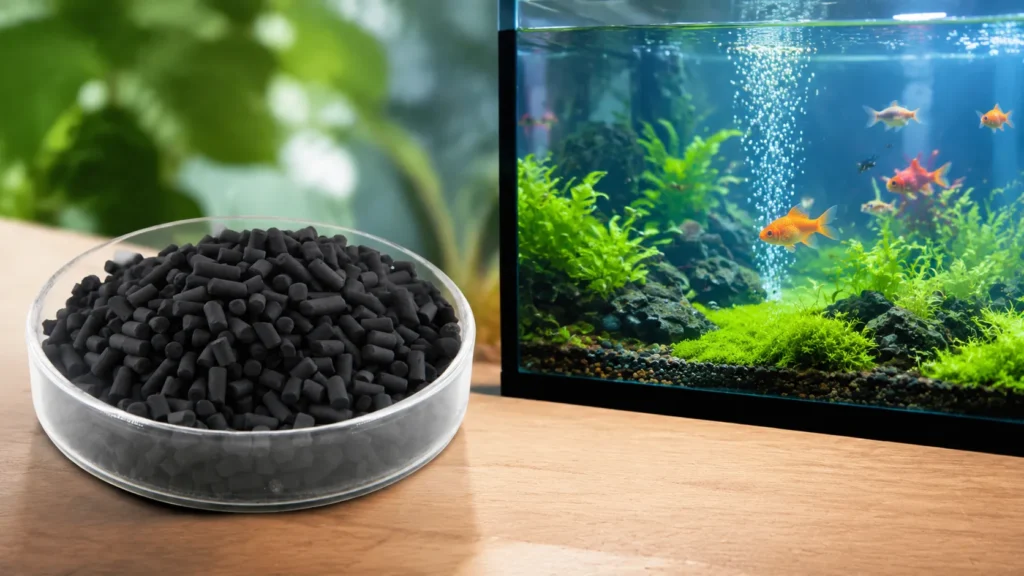
Coal-based pellet activated carbon is produced from high-quality anthracite coal through pelletizing and activation processes. Its cylindrical shape, high mechanical strength, and excellent water flow characteristics make it ideal for continuous filtration systems and large-scale aquarium applications.
Key Features:
- High mechanical strength and resistance to breakage
- Low pressure drop and excellent water flow
- Well-developed pore structure with high adsorption capacity
- Stable long-term performance
- Cost-effective solution for large filtration systems
Coal-based pellet activated carbon efficiently adsorbs organic contaminants, odor-causing compounds, and color-producing substances, helping maintain clean and transparent water.
In large public aquariums, commercial aquatic facilities, and recirculating water treatment systems, coal-based pellet activated carbon is widely used due to its durability, operational stability, and economic advantages. For systems handling large water volumes, it often provides a more cost-effective solution compared to frequently replacing other filtration media.
Contact me todayHow to Choose the Right Activated Carbon
For home aquariums and high-end marine or reef tanks, coconut shell granular activated carbon is often the preferred choice because of its high purity, superior adsorption performance, and low phosphate content.
For large aquariums, recirculating filtration systems, and applications requiring continuous operation, coal-based pellet activated carbon offers significant advantages in terms of strength, low resistance, durability, and overall cost efficiency.
Selecting the appropriate activated carbon based on aquarium size, filtration equipment, and maintenance requirements can significantly improve water quality and filtration performance.
How to Use Activated Carbon in an Aquarium
For best performance:
- Rinse activated carbon before use to remove dust.
- Place it in a filter bag or media chamber.
- Ensure water flows evenly through the carbon bed.
- Replace saturated carbon regularly.
The replacement interval depends on:
- Aquarium size
- Fish population
- Feeding frequency
- Water quality conditions
Typically, activated carbon is replaced every 3–6 weeks for optimal performance.
Frequently Asked Questions
How long does activated carbon last in an aquarium?
Activated carbon typically remains effective for 2-4 weeks in a functioning aquarium. Saturation time depends on bioload, feeding frequency, and carbon quality. Replace carbon when water clarity decreases or every month as preventive maintenance.
Can I reactivate used aquarium carbon?
No. Reactivation requires temperatures of 800-1000°C in controlled industrial conditions. Home methods (baking, boiling) cannot restore adsorption capacity and may release trapped contaminants. Always use fresh carbon.
Will activated carbon lower pH in my aquarium?
Quality aquarium carbon is pH-neutral and should not significantly alter pH. However, low-grade carbon with high ash content may cause pH swings. Always choose aquarium-grade activated carbon from trusted suppliers.
Should I use activated carbon in a planted aquarium?
It depends. Continuous use may remove liquid fertilizers and trace elements. Use activated carbon only when needed (after medication, for tannin removal) and remove it once the issue is resolved.
Does activated carbon remove ammonia from aquarium water?
Standard activated carbon is not designed to effectively remove ammonia. Biological filtration is the primary method for controlling ammonia in aquariums. However, activated carbon can remove dissolved organic compounds that may contribute to water quality issues.
Contact me todayConclusion
Activated carbon is an essential filtration medium for maintaining high-quality aquarium water. It effectively removes odors, discoloration, dissolved organic compounds, and residual medications while improving overall water clarity.
Looking for high-quality activated carbon for your aquarium life support system? Contact us for product specifications, bulk pricing, and technical support for large-scale aquarium installations.