
Activated carbon has been the gold standard for drinking water purification for over a century. From municipal water treatment plants to home filtration systems, this powerful adsorbent removes contaminants that affect taste, odor, and safety.
This article provides a detailed overview of the role of activated carbon in drinking water purification and offers guidance on selecting the best activated carbon products.
What Is Activated Carbon Used for in Drinking Water?
Activated carbon serves as the primary chemical filtration medium in drinking water treatment, targeting contaminants that conventional filtration cannot remove:
- Chlorine and chloramines removal – Eliminates disinfection byproducts and chemical taste
- Organic compound adsorption – Removes pesticides, herbicides, and industrial solvents
- Taste and odor control – Adsorbs geosmin, MIB, and other odor-causing compounds
- Volatile organic compounds (VOCs) – Captures benzene, toluene, and trihalomethanes (THMs)
- Heavy metal reduction – Removes lead, mercury, and arsenic (when specially treated)
- Pharmaceuticals and personal care products (PPCPs) – Reduces hormone disruptors and medication residues
How Does Activated Carbon Work in Water Filtration?
Activated carbon purifies drinking water through adsorption – a process where contaminant molecules adhere to the carbon’s internal pore structure. The activation process creates an enormous surface area riddled with micropores, mesopores, and macropores that trap dissolved organics while allowing water molecules to pass through.
The Three-Stage Adsorption Process:
- Diffusion – Water flows through the carbon bed, bringing contaminants into contact with the surface
- Adsorption – Organic molecules bind to the carbon’s pore walls through van der Waals forces and chemical interactions
- Retention – Contaminants remain trapped within the pore structure while purified water exits the filter
Types of Activated Carbon for Drinking Water Applications
Activated carbon plays a vital role in drinking water treatment by removing chlorine, unpleasant odors, organic contaminants, and other impurities. Choosing the right type of activated carbon depends on the treatment process, water quality, and target contaminants. The following are the most commonly used types of activated carbon for drinking water purification.
Coconut Shell Granular Activated Carbon
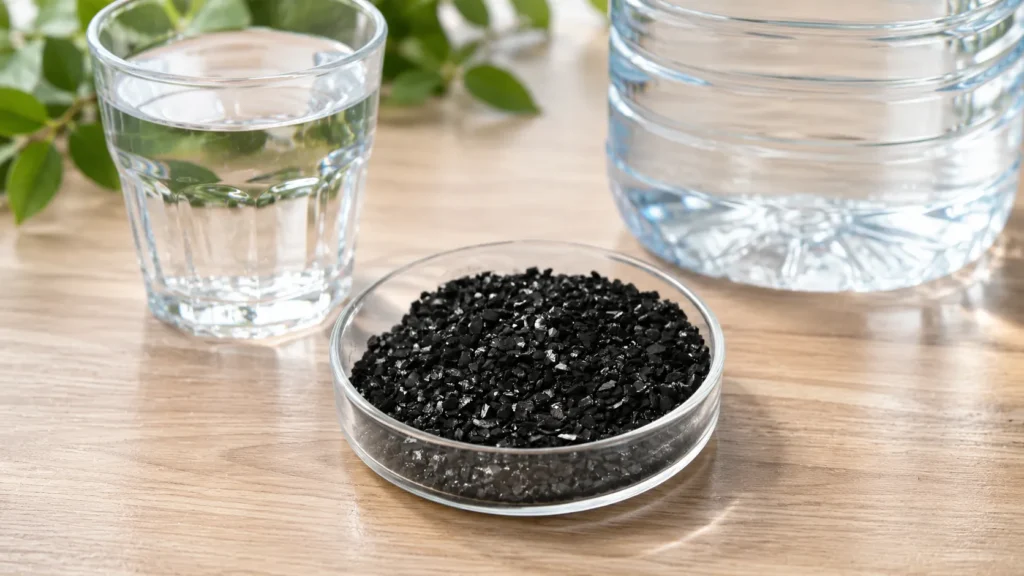
Coconut shell granular activated carbon is one of the most widely used products in drinking water purification due to its superior adsorption performance and high purity.
Features:
- Highly developed microporous structure
- Large specific surface area
- Excellent adsorption capacity for small organic molecules
- Low ash content, minimizing the impact on water quality
- High hardness and abrasion resistance
- Long service life and suitable for regeneration
Applications:
- Household water filters
- Bottled and packaged drinking water production
- Municipal drinking water treatment
- Groundwater purification
- Reverse osmosis (RO) system pretreatment
Contaminants Removed:
- Free chlorine
- Unpleasant taste and odor
- Pesticide residues
- Trihalomethanes (THMs)
- Volatile organic compounds (VOCs)
- Certain PFAS compounds when used as part of a properly designed treatment system
Coal-Based Granular Activated Carbon
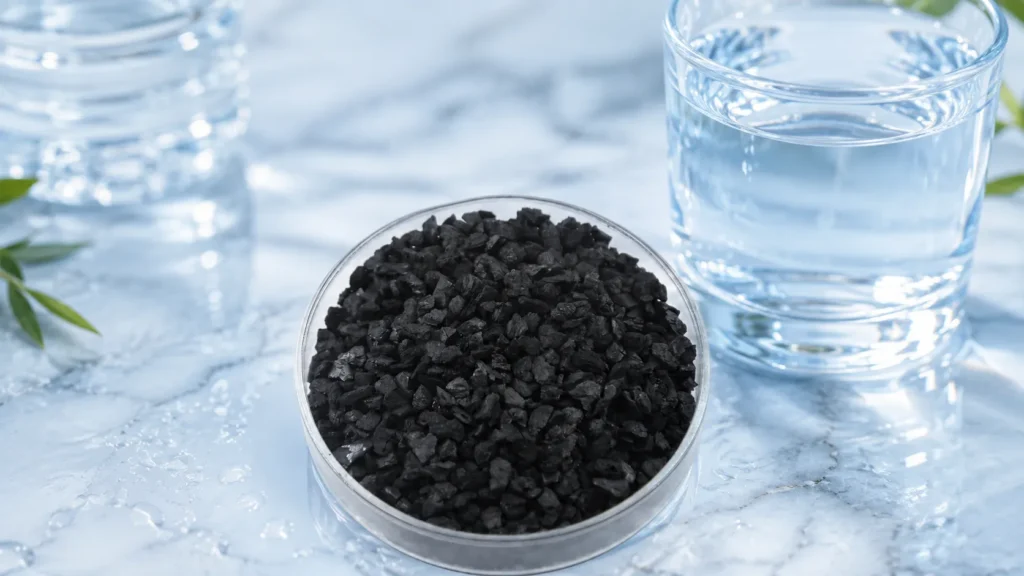
Coal-based granular activated carbon has a uniform pore structure distribution and is suitable for large-scale water treatment systems.
Features:
- High adsorption capacity
- Excellent mechanical strength
- Suitable for continuous operation
- Cost-effective
- Easy to backwash and maintain
Applications:
- Municipal water treatment plants
- Public drinking water supply systems
- Industrial drinking water treatment
- Large-scale filtration equipment
Advantages:
Coal-based activated carbon performs well in removing natural organic matter (NOM), color, and a wide range of dissolved organic contaminants.
Wood-Based Powdered Activated Carbon
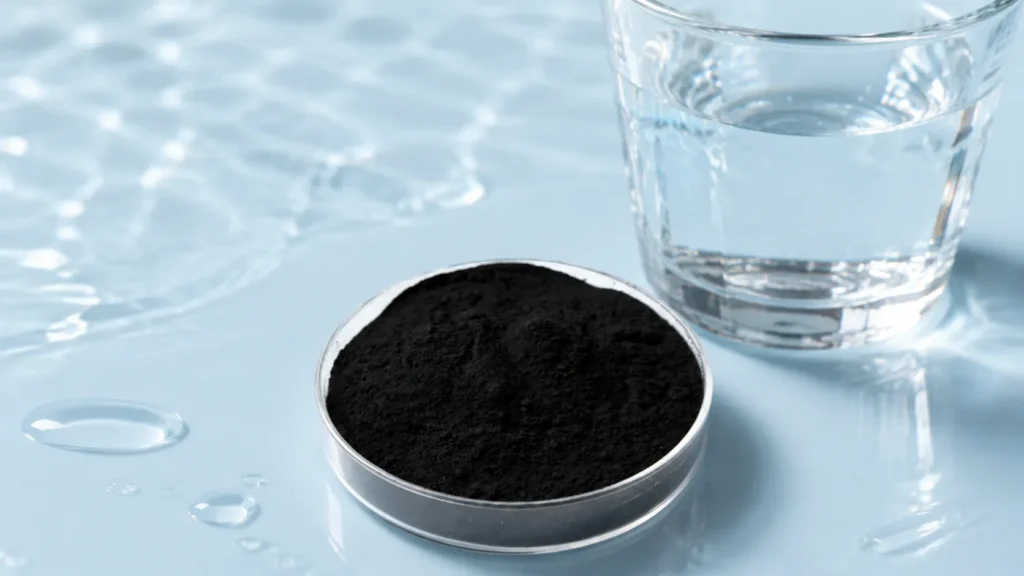
Powdered activated carbon is primarily used as a temporary or emergency treatment solution rather than a permanent filtration medium.
Features:
- Fine particle size
- Rapid adsorption kinetics
- Flexible dosing
- Single-use application
Applications:
- Emergency treatment of contaminated water sources
- Seasonal taste and odor control
- Algae bloom treatment
- Supplemental treatment in municipal water plants
How to Choose Activated Carbon for Drinking Water Treatment
Different applications require different types of activated carbon.
| Application | Recommended Activated Carbon |
|---|---|
| Household water filters | Coconut shell granular activated carbon |
| RO pretreatment | Coconut shell granular activated carbon |
| Municipal drinking water plants | Coconut shell GAC or coal-based GAC |
| Bottled drinking water production | Coconut shell granular activated carbon |
| Emergency water treatment | Wood-based powdered activated carbon |
| Groundwater purification | Coconut shell granular activated carbon combined with multimedia filtration |
Troubleshooting Common Issues
Chlorine Taste/Smell Returns Prematurely
Causes:
- Carbon bed exhausted (exceeded capacity)
- High chlorine levels in source water
- Insufficient contact time (flow rate too high)
- Channeling in GAC bed (needs backwashing)
Solutions: Replace carbon, reduce flow rate, backwash GAC system, install larger capacity filter
Black Particles or Dust in Filtered Water
Causes:
- Carbon fines not properly rinsed before installation
- Low-quality carbon with poor hardness breaking down
- Excessive water hammer or pressure fluctuations
Solutions: Pre-rinse new carbon thoroughly, use high-hardness coconut shell carbon, install pressure regulator
Bacterial Growth in Filter
Causes:
- Warm water temperatures (>77°F / 25°C)
- Stagnant water in filter (infrequent use)
- High organic load in source water
Solutions: Use silver-impregnated carbon, replace filters more frequently, flush filter before use after stagnation, keep system in cool location
pH Shift After Filtration
Causes:
- High-ash carbon leaching minerals (especially new carbon)
- Acid-washed carbon initially lowering pH
Solutions: Choose low-ash (<3%) coconut shell carbon, pre-rinse carbon extensively, allow 24-48 hours for pH stabilization
Contact me todayConclusion
Activated carbon remains the most effective, reliable, and widely used technology for removing organic contaminants, chlorine, and taste/odor compounds from drinking water.
Looking for NSF-certified activated carbon for drinking water applications? We supply premium activated carbon for municipal, commercial, and residential water treatment systems. Contact us for product samples, performance data, and custom carbon solutions for your water treatment needs.